
🌾How Much Does Pasture-Raised Meat Cost in North Texas?
Buying meat directly from a local farm is different than the grocery store—and so is the pricing. Here’s a clear, honest breakdown of what you can expect when buying pasture-raised pork and beef from Dos Lobos Ranch.

Jump to Your Meat-Pricing Questions
Compare hog shares, explore farm-direct value and understand what goes into our pricing. Choose a topic below.
Dexter Beef | Kunekune Pork
Honest. Local. Regenerative.
"At Dos Lobos Ranch, we believe in radical transparency—in how we raise our animals, how we care for our land, and how we price our products."
This page explains exactly how our pricing works, why pasture-raised meats sometimes cost more than store-bought options, and how investing in nutrient-dense, regeneratively raised food supports your family’s health and your local food system.

🐖 Bulk Pork Pricing at a Glance
How our bulk pork buying program works at Dos Lobos Ranch and what pasture-raised meat costs per pound.
Is Buying Bulk Meat Worth It?
🐽Half Hog: 30-45 lbs. of meaty pork cuts➡️ $640 total➡️ 3-4 cu. ft. of freezer space
🐖Whole Hog: 75-90 lbs. of meaty pork cuts➡️ $1,280 total ➡️ 7 cu. ft. of freezer space
One of the biggest questions is freezer space…
🐖How Much Does a Whole or Half Hog Cost in Texas?
In North Texas, the cost of a whole or half hog typically depends on:
- The size of the animal
- Processing choices (bacon, sausage, etc.)
- Custom cut selections
At Dos Lobos Ranch, most customers can expect:
- Half hog: around $600–$800 total
- Whole hog: around $1,200–$1,600 total
Full Bulk Pork Price Breakdown
| Share Size / Plan | Typical Price / lb.* | Total Investment | What You Get |
|---|---|---|---|
| Half Hog 20% off our retail cuts price |
$14.22 / lb (meaty cuts only) $10.67 / lb. if you opt to take the optional organs, bones, fat |
$640 total investment Delivery extra ($1 per mile up to 60 miles from the farm) Butcher costs included |
30-45 lbs. take-home pork (meaty cuts) 10-15 lbs. of organs, bones, fat (optional) |
| Whole Hog 20% off our retail cuts price |
Same as above | $1,280 total investment Delivery extra Butcher costs included |
70-90 lbs. take-home pork 20-30 lbs. of organs, bones, fat (optional) ⭐Best value per pound |
| Pay-as-It-Grows 15% off of our retail cuts price |
$15.11 / lb. (meaty cuts) $11.33 / lb. with optional organs, bones, fat |
Whole hog = $1,360 ($136 per month for 10 months) Half hog = $680 ($68 per month for 10 months) $77.50 of total payments go towards additional card fees + Grazecart subscription service fees Butcher costs included |
Same portions of take home pork as above Convenience of monthly payments vs. large 50% deposit up front and 50% due at pickup |
See a sample monthly pig update
Pay-As-It-Grows customers receive a monthly note and photos from the ranch as their pig grows. Here is an example of the update buyers receive; the pigs and details in your own update will vary.

*Prices based on our best averages of finished hogs -- not all hogs will hit their weight target exactly, but will be within a close ballpark, or sometimes better (a win in your favor).
👉Most families looking at pricing end up reserving a whole or half hog once they understand the value.
❓Is Buying Meat in Bulk Worth It?
For most families, the answer is yes—especially if you:
- Cook at home regularly
- Want consistent, high-quality meat
- Prefer to stock your freezer and reduce store trips
👉 Most customers start with a bundle…
👉 Then move to a whole or half hog once they understand the value
📊 Pricing Comparison: Grocery Store vs Farm Pricing
Is buying from a farm worth it? Yes! Grocery store meat is cheap -- so is the quality, nutrition profile, and flavor. Small farms are bringing quality back to a gold standard that has been forgotten for generations.
Grocery Store vs Buying Direct From a Farm
| Category | Grocery Store | Dos Lobos Ranch |
|---|---|---|
| Source | Unknown; multiple manufacturers / countries of origin | Direct from farm |
| Quality | Commodity | Pasture-raised, curated breeds for flavor & quality, clean-feed commitment (corn & soy-free) |
| Transparency | Low | Full |
| Price per lb. | Lower upfront | Higher upfront -- lower long-term cost + higher quality |
👉 When you buy from a farm, you’re not just paying for meat—you’re investing in quality, transparency, and how your food is raised.
📊 Pricing Comparison: Dos Lobos Ranch vs ButcherBox & Good Ranchers
What does pasture-raised meat cost per pound?
Dos Lobos Ranch vs Butcher Box & Good Ranchers
| Provider | Typical Price / lb* | Quality & Sourcing | What You Get |
|---|---|---|---|
| Dos Lobos Ranch Pasture-Raised Beef, Pork, Turkey |
Varies by cut — transparent per product; Beef Average Price is $19.42 per pound, Pork Average Price is $14 per pound | 100% pasture-raised; grass-finished Dexter beef; soy/corn-free Kunekune pork; regenerative grazing; fully local. | Local delivery or market pickup; regional and national shipping; customizable cuts; complete transparency; nutrient-dense meats high in omega-3s & CLA. |
| ButcherBox | $10.50–$15 / lb | Grass-fed beef and pasture-raised options, but large-scale sourcing across multiple regions. | Subscription delivery; curated or custom boxes; national shipping. |
| Good Ranchers | $14.53–$18.43 / lb | Domestic beef and chicken; some grain-finishing depending on product; large aggregated supply chain. | Subscription or one-time bundles; national delivery; focuses on American-sourced meats. |
*Prices based on publicly available subscription-box pricing as of 2025. Dos Lobos Ranch prices are listed per product and vary by cut and weight.
⚖️Why Pasture-Raised Meat Costs More
Unlike industrial meat production, small farms operate differently.
Your purchase supports:
- Raising animals on pasture (not confinement)
- Higher-quality feed and land management
- Humane handling and slower growth
- USDA-inspected processing
- Local distribution and small-scale farming
👉 This results in better flavor, better nutrition, and a more transparent food system.
When buying individual cuts:
- Premium cuts (chops, steaks, bacon): higher per pound
- Ground meats and roasts: lower per pound
When buying in bulk (whole/half hog):
👉 Your final average cost is typically: $12–$18 per pound (all cuts combined)
👉 This includes:
- Premium cuts
- Ground meats
- Roasts
- Bones, fat, and extras
⭐ Farm Economics: Where Your Money Goes
Our pricing reflects the true cost of raising animals the right way.
✔ Slow-growing heritage breeds
Dexter cattle and Kunekune pigs grow naturally—not pushed by feedlot rations, added hormones, or antibiotics in the feed. Slow growth + natural forage based diet = better flavor, higher nutrient density, higher omega-3 fats, and elevated CLA (conjugated linoleic acid).
✔ 100% pasture-raised, grass-fed, and ethically managed
No feedlots. No confinement barns. No shortcuts—ever.
✔ Local, humane processing
We partner with USDA-inspected processors focused on quality, not volume.
✔ Regenerative land stewardship
Our animals restore soil health, improve forage diversity, and increase carbon capture.
✔ No fillers, additives, or imported meats
Everything you buy is born, raised, and processed in Texas, by our family. And quite frankly, real meat raised the way its meant to be naturally, tastes far better than anything you can find in a grocery store and even some restaurants.
❌No access to low-cost, commodity price feeds
Because small farms aren't bringing in the volume that mega-feedlots are, we don't have access to the same feed pricing they do. We're lucky to land clean-sourced feed in the $0.20 (by the ton) or $0.50 (by the bag) per pound range while the mega-producers buy it by the 10,000's of tons and likely get $0.05 (best guess) cents per pound, driving the price of production costs way down. So yes, meat from a small farm will be 4x's the price of grocery store meat -- it has to, or we become a charity, not a business... and that's not survivable.
❌No access to government assistance, bail-outs, or subsidies
Small farms are just not a part of the economic engine that runs the country -- but we are part of the economic engine locally. We wonder how much of the grocery store priced meats are actually inflated by subsidies and other funding, so you're not only competing against a low price as a small farm, it's impossible to gain access to it. Plus, how much are consumers paying for their food from the grocery store really? Tax payers fund the subsidies, bailouts, and government programs... so did you pay for your food twice, once at the cash register and once through your income tax and everything else you're taxed for? I can't answer that directly -- only project a conspiracy theory at this point, but you get my drift.
🏆Where small farms win in this game
You’re not just buying meat—you’re investing in nutrition, stewardship, transparency, and a resilient local food system. Not to mention the boost in nutrition, just the quality of the eating experience blows the grocery store competition out of the water! If you haven't tried meat from a local farm yet, you're about to be blown away! You'll never want grocery store meat again... I promise.
👉 Where the money goes
All of our costs go into raising the animal (feed, land management, labor), processing (USDA butcher, vacuum sealed packaging), delivery and logistics (packaging, insulation, carrier fees), small-scale farming realities (vet costs, losses of life despite all efforts, acts of God), overhead (our mortgage, insurance, and hopefully someday... retirement).
🌾Pasture-Raised Meat Pricing in North Texas
We serve families across:
- Dallas
- Fort Worth
- Denton
- Wise County
- Surrounding North Texas communities
👉 Whether you’re ordering for delivery or farm pickup, buying direct gives you access to high-quality local meat you can trust.
🪜Ready to Take the Next Step?
Most families who land on this page are comparing prices…
👉 And end up reserving a whole or half hog once they understand the value.
Start Here:

♾️We don’t raise unlimited animals.
When a litter weans, we confirm the final headcount for hog shares and add those hogs to the available share pool.
New shares are released as litters wean, rather than on a fixed monthly schedule. Check current availability or join the waitlist to hear about the next release.
Everything below this point gets incredibly detailed on how a small farm can make money on what it produces.
👇
🥩 Grass-Finished Dexter Beef Pricing
Premium flavor. Elevated nutrients. Truly grass-finished.
Our Dexter cattle are 100% grass-fed and grass-finished, never supplemented with grain. Dexter beef is known for its tenderness, deep beefy flavor, and high CLA content.
Popular Cuts & Pricing
We price everything based on a sliding scale average. For example: if our break-even price is $8 per pound (that includes feeding hay in the winter, management and feed costs of the brood cow that raised that steer, mineral costs, our labor in moving them daily on pasture, butcher costs, transport costs to and from the butcher, freezer electricity use, depreciation rates of handling equipment, trailers, vehicles, etc.), then we price our least popular items at or below that price (such as soup bones), our popular items are twice that at $16 per pound (such as ground beef, some lower-end steak cuts), and the most popular and most sought-after items at even higher rates of three times that around $20-30 per pound (such as ribeye steaks, tenderloin, filet minon).
Ground Beef (90/10): Great flavor, nutrient-dense, versatile (Base price starts at $15 per pound and goes up for our specialty primal and ancestral blends that include the organ meat, and you can bet the butcher charges more for the exact measurements of the organ meat blends and the time it takes to produce them).
Steaks: Ribeye, New York Strip, Sirloin, Tenderloin, Picanha, Skirt, Flank (Base price starts at $20-30 per pound)
Roasts: Arm, Chuck, Neck, Brisket (Roasts are priced high in the $20 range because they are just THAT good -- fall apart, fork-tender)
Bones & Organs: Meaty soup bones, marrow bones, liver, heart, suet fat (Priced lowest somewhere in the $5-10 range, just at break-even price or below it)
Exact prices appear on individual product pages and fluctuate with weight. In all, our average price across all retail cuts is $16 per pound. This covers all of the operation and production costs of that beef and pays us a fair wage as well. When we take a steer to the butcher, our worst ones have dressed at 150 lbs. worth of cuts and our best at around 200 lbs. worth of cuts. This is the reality of grass-finished Dexter beef: smaller animals, not pumped up on grain (and also why we're working to improve our genetics). 200 lbs. x $16 per pound average = $3,200 in our pocket in returned revenue. Our production cost (or sometimes purchase cost if we bought extra steers from another rancher) is a $600-700 base purchase price for the animal at 6 months of age, sometimes more, about $600-700 to butcher (based on hang weight ranges), and that leaves room for some overhead and fuel costs of about $120-150. The rest pays us and pays it forward to the next animal in production, so roughly $1500-1600 is what it costs to break us even on producing one beef animal.
🐖 Kunekune Pasture-Raised Pork Pricing
Heritage breed pork with rich, buttery fat, tender meat, and incredible flavor.
Kunekune pork is unlike anything in grocery stores. Their slow growth and forage-based diet produce:
- naturally marbled meat for a more tender cut
- clean, creamy fat ideal for lard
- superior flavor with high omega-3s and CL
- Popular Kunekune Cuts & Pricing
- Bacon (smoked & cured, thick-cut, jowl bacon)
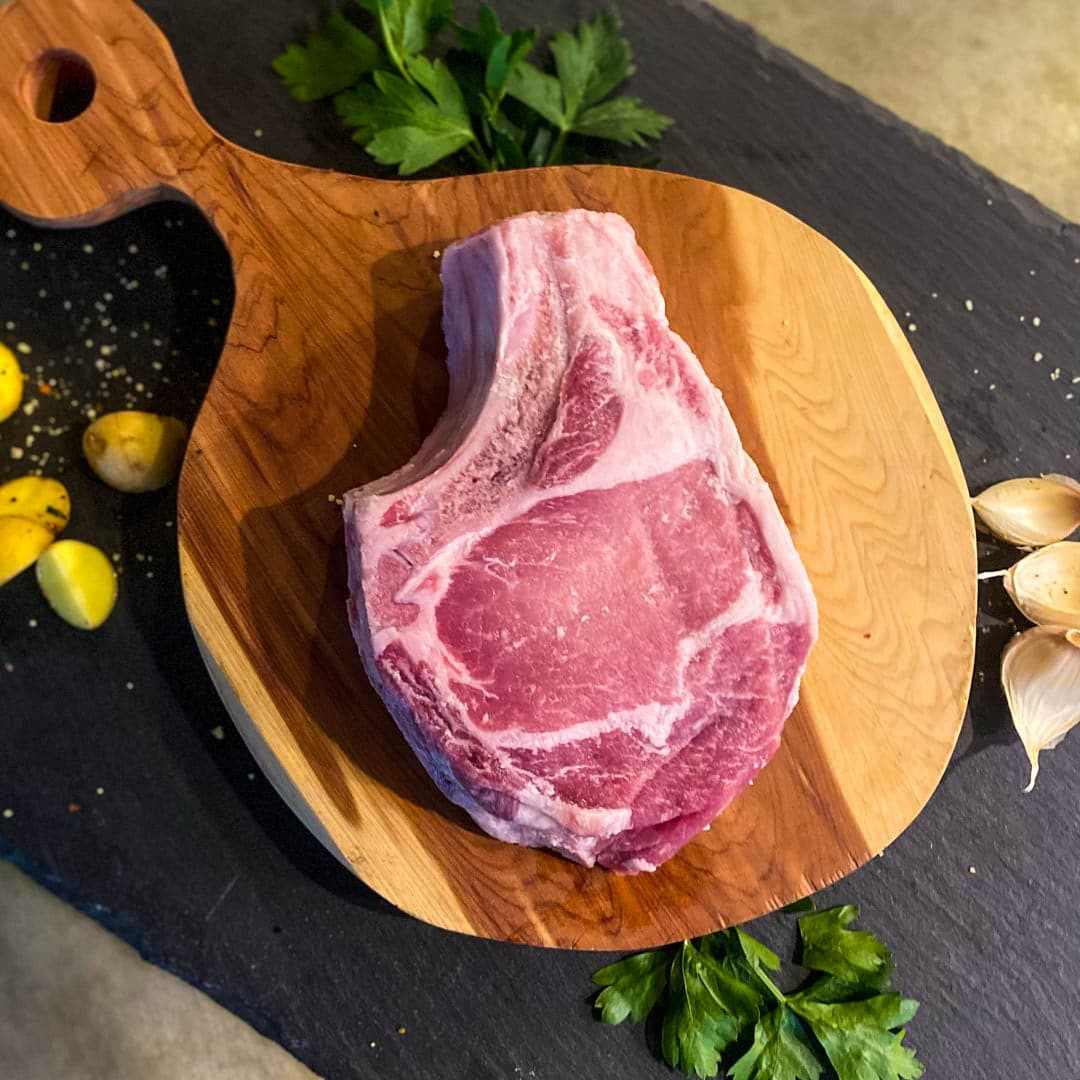
- 1.5” Bone-In Chops & Ribeye Pork Steaks
- Boston Butt, Country Ribs, Spare Ribs
- Ground Pork, Breakfast Sausage (mild, hot, maple, Italian), Summer Sausage (Original, Jalapeño & Cheddar)
- Ham Steaks, Whole Smoked Hams
- Leaf Fat & Back Fat for rendering
- Customizable cut sheets
- Best value per pound
- Savings on sausages, chops, roasts, and bacon
Bulk Hog Pricing (Half & Whole Hog)
Pricing of Kunekune Pork at Dos Lobos Ranch
Our pork takes 12-15 months to reach a usable market weight (compared to production breeds that are ready at 6 months of age) and has a break-even price of about $7 per pound, so our average mark-up is around $14 per pound, with the most desirable cuts priced way above that (restaurant quality 1.5" chops and pork ribeyes), and the least desirable priced below that break-even point (leaf and back fat, bones). Summer sausages cost much more to produce, so they are priced higher than our breakfast sausages.
Heritage Breed Pork vs. Production Breed Pork
Many production breeds are also considered heritage breeds, but grow to an acceptable butcher weight by 6 months of age. The heritage breeds of pork can be easily identified by dark red meat at butcher, especially those raised in a pasture environment. Kunekunes are a breed that was saved from the brink of extinction in the 1960's, 70's, and 80's with fewer than 20 individuals left in the population. This unique little pig hails from New Zealand and the Polynesians. Their name is from the Maori language and translates to "fat and round" and there couldn't be a more accurate description of these gentle-natured, pasture adapted pigs!
The Art of Slow Grown Pork
Many people scoff at the idea of using Kunekunes in a meat program and some have even tasted the meat and find it tough and undesirable with far too much fat on the animal. The problem with a lot of the "kunekunes" that have been sold are not purebred, and it shows in the animal's body and facial structure. If you can't produce a photo of the animal you ate, you probably didn't eat Kunekune and ate a pot belly pig passed off as a Kunekune. Our Kunekune herd is from registered stock and our brood stock are all registered, so you know you're getting the real deal. On top of that, we breed and test for genetic tenderness using Igenity Swine. Kunekunes have the genes for tenderness that many production breeds do not and are struggling to find. So we have the paper work and the data to back up what we sell. And hey, if you don't like it, visit our homepage and you'll find our Dos Lobos Satisfaction Guarantee. It's a win-win. (But we have a feeling you'll suck that meat off of the bone of that pork chop before you finish the rest of your plate! That's our real guarantee!) 😏
Curious what other local farms offer? We’ve created a guide to farms across Wise County and the Dallas–Fort Worth area.
⚖️Sliding Scale Pricing
Our Dexter Beef, Kunekune pork, pastured-raised eggs, and heritage turkey is priced on the same sliding scale.
The break-even cost is identified, and then cuts get marked up or marked down based on demand and market desirability. The goal is to make back twice the amount that we put into producing it. Setting our pricing up this ways does three things and is divided in three avenues: the mark-up covers 1/3 of productions costs, 1/3 pays it forward to the next animal in production, 1/3 pays us a fair wage.
And yes, our pork especially is absolutely priced WAY over grocery store prices, even high-end grocery store prices. But this is the reality of raising slow-growing heritage breed of pig that takes 12-15 months to reach market weight. The other truth of the matter is, we've dialed in our pork genetics pretty quickly, and we truly are delivering restaurant quality pork, every time! Those who've been willing to try it already know... and they're hooked!
📦Packaging Materials
This gets a little more complex.
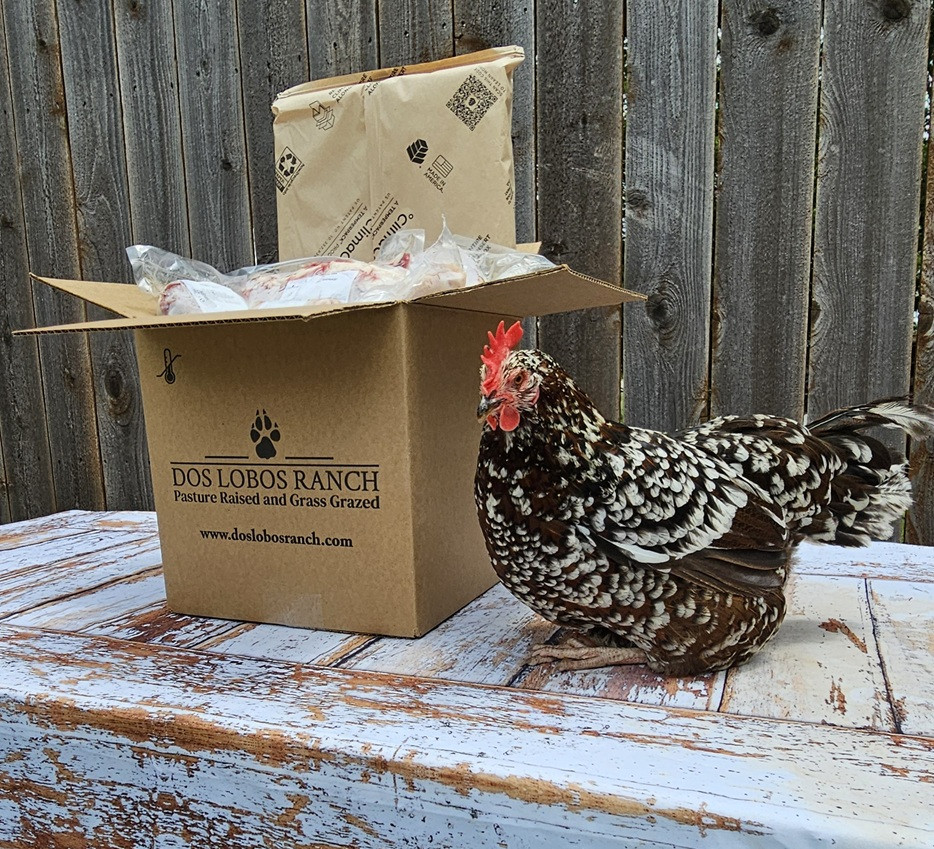
This gets a little more complex. We do not upcharge for packaging and price for replacement cost of those items such as boxes, ices packs, insulators, etc. These are also priced based on an average for each shipping or local courier zone. The average cost of all three of our box sizes for shipping including full insulation and two 2-pound ice packs (4 lbs. of ice packs are used in each box, maybe more if it's the middle of summer) comes to $17.96 per box.
Could we get the cost of materials lower? Absolutely! However, we're nowhere near needing a bulk order of these things (think several pallet loads of stuff) which the best quotes we've received is somewhere in the $10,000 range. That's just not doable at this moment in time, but could effectively get the cost of materials down to about $8-9 per box. Maybe someday we can grow to a point where we can buy in bulk and pass that savings on to our customers!
Local courier packaging is a little cheaper at just the price of a box, a cheaper insulated bag, and an ice pack or two and averages at $5-6 per order.
Bonus: All of our packaging materials are 100% recyclable and environmentally friendly from the paper box insulators to the disposable gel ice packs!
📉Local Courier Prices
We use Uber Eats and UPS Roadie through Shipfare to coordinate and purchase discounted delivery rates.
Local courier service is available in eligible 15- and 30-mile ZIP codes. For destinations farther from the ranch—including Denton, Sanger, Grapevine, Benbrook, and Weatherford—we now use the Greater Dallas / Fort Worth 1-day shipping option. Your available service, dates, and final charges appear when you choose your address at checkout.
Courier costs include the driver, insulated packaging, and distance traveled. We review each order before fulfillment and use the appropriate available service for its destination. Farm pickup and farmers-market pickup remain options for customers who prefer to avoid delivery charges.
🌟 We serve eligible addresses across Wise, Denton, Tarrant, Dallas, Collin, and Parker counties—and beyond through regional and national shipping.
📉Shipping 1-2 Day Prices
We use UPS for our nation-wide shipping option.
The cost of shipping averages $25-30 per order with the negotiated discounted rate through Shipfare. Add that to our average box cost of $17.96 and it costs roughly $45-50 to ship anywhere in the lower 48.
📉Free Delivery
Being honest here, free delivery is never truly free and is a marketing strategy.
“Free delivery” still has a real cost: insulated packaging and transportation are built into our pricing. Farm and farmers-market pickup use base prices; delivery prices vary by the service available for your ZIP code.
Our current pricing groups are 15-mile local courier, 30-mile local courier, Greater DFW 1-day shipping, regional 1–2-day shipping, and nationwide 2–3-day shipping. The approximate increases over farm-pickup retail prices are 25%, 30%, 25%, 29%, and 31%, respectively. Free shipping starts at $199 for Greater DFW, regional, and nationwide shipping. Free local courier delivery starts at $179 in the 15-mile zone and $239 in the 30-mile zone. Availability and final pricing are shown when you select your location at checkout.
We use these adjustments to help cover fulfillment costs, not as a separate profit center. We pay for the packaging and transportation required to get frozen meat to your door.
📉 How Our Prices Compare to Grocery Stores
While you may see cheaper options at supermarkets, the comparison isn’t equal.
- Grocery Store “Grass-Fed” Beef
- Often imported from overseas (Australia, Uruguay, Brazil)
- Frequently finished on grain
- Labeled “grass-fed” but not truly pasture-raised
- Lower CLA and omega-3 content
Dos Lobos Ranch Meat - Born, raised, processed, and packaged locally
- 100% pasture-raised
- Never confined
- Regenerative practices
- Superior flavor & nutrition
You’re paying for real transparency and real quality, not marketing buzzwords. (Except on the free shipping... you got me there!)
🌱 Our Commitment to Fair & Ethical Pricing
We never inflate prices or charge extra for “buzzword” marketing. Our pricing reflects real food raised the right way.
- We price our meats based on:
- animal welfare
- regenerative forage management
- humane processing
- living wages for local processors and ourselves
- sustainable business operations
❓ Frequently Asked Questions
Why is pasture-raised meat more expensive?
Why is pasture-raised meat more expensive?
Because it takes longer to grow, requires more land, and prioritizes animal welfare and nutrient density over speed and volume.
Is buying bulk beef or pork cheaper?
Yes—bulk orders offer the lowest price per pound and give you a freezer full of premium meats.
How much freezer space do I need?
Much less than you might think because these are smaller heritage-breed animals.
- ½ Dexter beef: 3–4 cu. ft. (75–100 lbs. of cuts and fat)
- Whole Dexter beef: 6–7 cu. ft. (175–200 lbs. of cuts and fat)
- ½ Kunekune hog: 2–3 cu. ft. (30–40 lbs. of meaty cuts plus 10–20 lbs. of optional bones, organs, and fat)
- Whole Kunekune hog: 6–7 cu. ft. (90–100 lbs. of cuts and fat)
Do weights vary?
Yes. All prices reflect the weight ranges shown on each product page.
Do you use additives or fillers?
Never. We use no dyes, nitrates unless identified on cured meats, fillers, or imported meat.
✅ How Dos Lobos Ranch Compares
We're real farmers. We're local. And we're honest to a fault.
- Local & Transparent Sourcing — You know exactly where the animals were born, raised, and processed. No mystery meats, no foreign grain-finished beef.
- Regenerative Farming & Animal Welfare — Full pasture rotation, heritage breeds (Dexter cattle, Kunekune pigs), no confinement — not typical for national box-meat services.
- Custom Cuts & Flexibility — Order only what you need: ground beef, ribeye, whole hog, half beef, etc. National boxes often force fixed bundles or limited cut options.
- Support for Local Economy & Land Stewardship — Every dollar stays local; helps maintain pasture health and supports small-farm sustainability.
🫨If you're another local farmer or rancher reading this...
We love you; you're our neighbor. Use this info so you can get your products directly into the hands of customers and eliminate the middle man, big 4 meat packers, and anyone else undercutting your family and your farm business for your true worth. Rock on, foodie rebels! 🤘🤘
If you're curious about starting your own shipping service of your own meats, U-Line has the best bang for your buck for packaging materials. If you want branded boxes like ours, try Customboxes.io. For a shipping broker, we're very happy with Shipfare! In fact, there is a referral program. You'll automatically receive a $100 credit into your account to cover shipping and delivery costs, and once you've spent $300 on shipping afterward, Dos Lobos Ranch will receive $300. Click the Shipfare badge below to be taken to our referral page.
Feel free to reach out with marketing related questions. Us small farms and ranches are not in competition with each other and we don't mind sharing what has helped us!

Click to be directed to our Shipfare referral page to get $100 credit into your account to try shipping for your farm! After you spend $300, Dos Lobos Ranch will receive $300.

Click to be directed to the Grazecart referral page to try out Grazecart for your farm! We've been Grazecart customers since 2023 and have never looked back. Fill out the form and let them know Dos Lobos Ranch referred you!