How We Raise Your Food
At Dos Lobos Ranch, we believe food should come with a clear story. You should know where it was raised, how the animals lived, what they ate, and why the farm made the choices it made.
We raise pasture-raised Kunekune pork, grass-fed and grass-finished Dexter beef, seasonal turkey, and other farm products on our small North Texas ranch using regenerative grazing, transparent animal care, and a soil-first approach.
This page explains how we raise your food from the ground up — starting with healthy soil, healthy pasture, and animals raised with purpose.

Quick Answer: How Do We Raise Your Food?
We raise food on pasture using regenerative grazing, species-appropriate care, careful breeding decisions, and transparent farm practices. Our cattle are grass-fed and grass-finished, our pigs are raised on pasture with corn-free, soy-free, flax-free, non-GMO feed, and our farm is managed to support healthy soil, healthy animals, and better food for local families.
Our Farming Philosophy
Our approach is simple: raise animals in a way that respects the land, respects the animal, and produces food we are proud to feed our own family.
We are not trying to produce the cheapest food possible or push animals to grow as fast as possible. Instead, we focus on practical, pasture-based systems that fit our land, our animals, and our long-term goals.
That means we make decisions based on soil health, animal welfare, eating quality, transparency, and whether the system can keep working year after year.


The Dos Lobos Ranch Food Chain
We think about food as a connected chain. Healthy food does not begin in the kitchen. It begins in the soil.
| Step | What It Means |
|---|---|
| Healthy Soil | We manage our land to build organic matter, improve water infiltration, and support pasture growth. |
| Healthy Grass | Pastures are rested, grazed, and managed so plants can recover and regrow. |
| Healthy Animals | Animals are raised with access to pasture, minerals, water, shelter, and species-appropriate care. |
| Better Food | The final product reflects the animal, the land, the genetics, and the management behind it. |
| Your Family | Customers receive food raised by a local farm they can know, question, and trust. |

It Starts With Healthy Soil
Regenerative farming starts below the surface. Soil is not just dirt. It is a living system that supports grass, animals, water cycles, insects, microbes, and the food we raise.
On our ranch, we use grazing, compost, organic fertility inputs, pasture rest, and careful observation to keep improving the land over time.
We pay attention to things like forage recovery, manure breakdown, dung beetle activity, ground cover, rainfall, and how quickly pastures respond after grazing.
Our goal is not simply to take from the land. Our goal is to leave the land better than we found it.
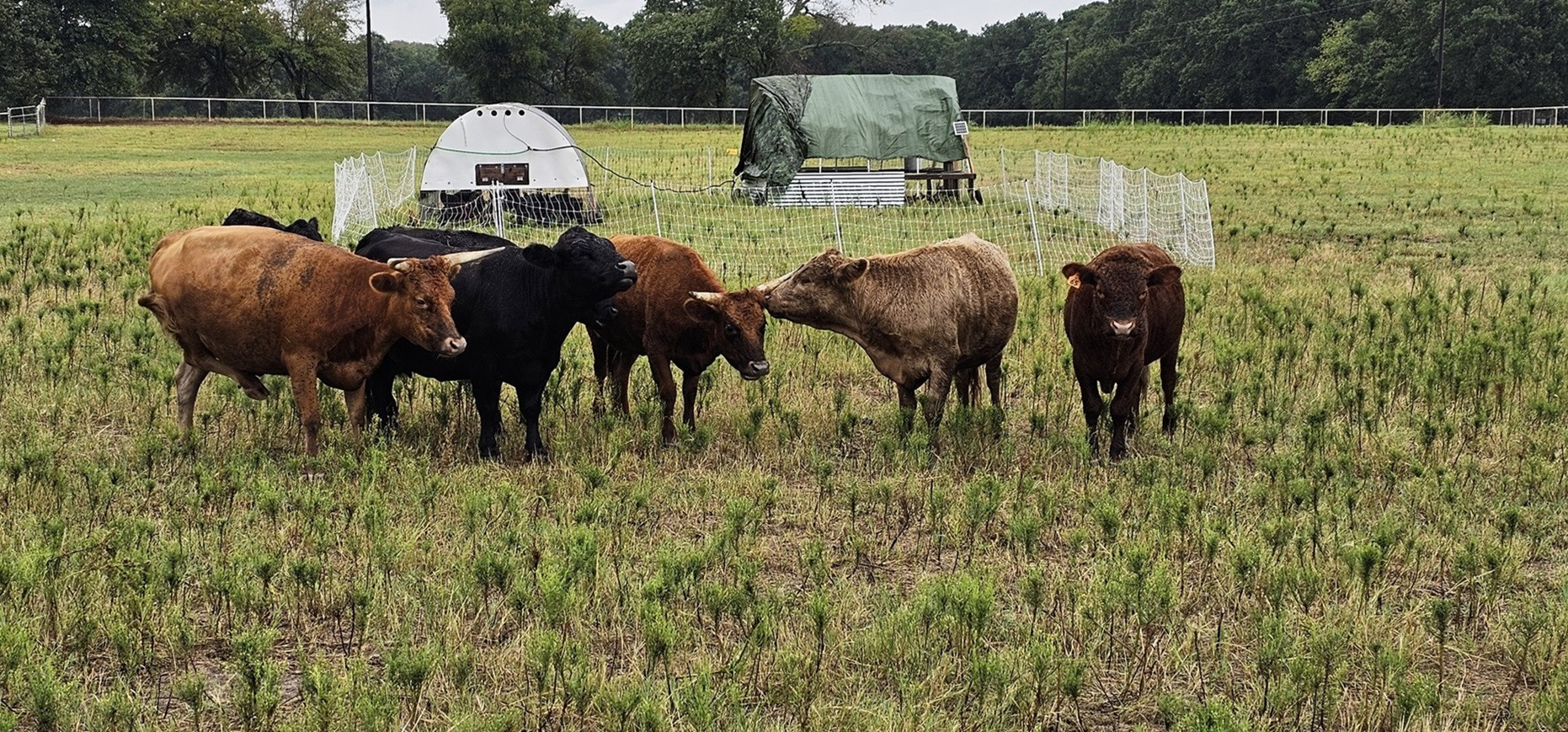
soil health at Dos Lobos Ranch
See How We Manage Our Land
We’re grateful to Dave at Big Little Farm for taking the time to feature our pastures and how we manage soil health in one of his videos!
How We Manage Pasture
Pasture is one of the most important resources on our farm. We use rotational grazing to move animals through smaller areas, then allow those areas time to rest and regrow.
This grazing pattern helps distribute manure, reduce overgrazing, support root growth, and keep animals moving across the land instead of staying in one place too long.
| Practice | Why It Matters |
|---|---|
| Rotational Grazing | Helps prevent overgrazing and gives pastures time to recover. |
| Pasture Rest | Allows grass and forage plants to regrow before animals return. |
| Manure Distribution | Returns nutrients to the soil naturally. |
| Forage Observation | Helps us adjust grazing based on weather, rainfall, and pasture condition. |

How We Raise Grass-Fed Dexter Beef
Our Dexter cattle are raised on pasture and finished on grass. We do not send our cattle to a feedlot, and we do not grain-finish our beef.
Dexter cattle are a moderate-framed heritage breed that fits our small farm and forage-based system well. We select for cattle that can thrive on grass, remain structurally sound, raise quality calves, and produce tender beef.
- Grass-fed and grass-finished beef.
- Rotational grazing on pasture.
- Hay provided when pasture growth slows during winter or drought.
- No grain finishing.
- No corn, soy, flax, or GMO feed.
- Mineral support and low-stress handling.
- Breeding decisions that consider structure, temperament, forage efficiency, maternal ability, and tenderness genetics.
If you want to learn more, read our Complete Guide to Dexter Beef or visit our Grass-Fed Dexter Beef Collection.

How We Raise Pasture-Raised Kunekune Pork
Our Kunekune pigs are raised on pasture with room to root, graze, explore, and live like pigs. Kunekunes are a heritage lard-type pig known for their medium size, rich pork, and excellent eating quality.
Because pigs are not ruminants like cattle, pasture alone is not enough to meet all of their nutritional needs. Our pigs receive supplemental feed from a local mill, but we use a corn-free, soy-free, flax-free, non-GMO feed program.
- Raised on pasture.
- Access to shelter, water, shade, and mud when needed.
- Corn-free, soy-free, flax-free, non-GMO feed.
- No routine antibiotics or growth hormones.
- Breeding decisions focused on mothering ability, structure, growth, temperament, and pork quality.
- Slow-grown pork with rich flavor and traditional fat quality.
To learn more, visit our Complete Guide to Kunekune Pork or shop our Pasture-Raised Kunekune Pork Collection.
For other farms and homesteads looking for breeding stock, check out Our Kunekune Breeding Program.

How We Raise Seasonal Turkey and Poultry
Our poultry program is seasonal and small-scale. When we raise turkeys, they are raised with access to pasture, fresh air, shelter, and room to move.
Pasture-raised poultry still requires feed because birds need balanced nutrition for healthy growth. Our goal is to provide high-quality feed, clean water, safe housing, and outdoor access while keeping flock welfare at the center of the system.
Because our poultry availability changes by season, customers should check our store or newsletter for updates on turkey availability.
Learn more about our seasonal poultry practices on our pastured poultry protocol page.

What Our Animals Eat
Different animals have different nutritional needs. We do not pretend cattle, pigs, goats, and poultry all eat the same way.
| Animal | Main Diet | Our Approach |
|---|---|---|
| Dexter Cattle | Grass, forage, hay, minerals | Grass-fed and grass-finished with no grain finishing. |
| Kunekune Pigs | Pasture plus supplemental feed | Corn-free, soy-free, flax-free, non-GMO feed from a local mill. |
| Turkeys and Poultry | Pasture access plus poultry feed | Seasonal pasture-raised poultry with feed, shelter, and outdoor access. |
| Goats | Forage, browse, hay, minerals | Managed with attention to body condition, parasites, minerals, and reproductive health. |
We Select Genetics, Not Just Animals
Raising good food starts long before harvest. It starts with breeding decisions.
We select animals for traits that matter in a real farm system: fertility, temperament, sound feet and legs, mothering ability, growth, forage efficiency, longevity, and eating quality.
In our Dexter cattle, we also use tenderness-related genetic testing as part of our long-term breeding decisions. In our Kunekune pigs, we pay close attention to structure, teat lines, growth, mothering ability, temperament, and pork quality.
Our goal is not simply to own animals. Our goal is to build herds that fit our land, raise strong offspring, and produce food that gets better over time.
Be the first to know about new calves, litters of piglets, tips, tricks, lessons learned, and more in our Livestock Insider Newsletter!

Animal Welfare Comes First
We believe livestock deserve care, attention, and respect. Good animal welfare is not just a nice idea. It directly affects animal health, farm sustainability, and food quality.
- Fresh water.
- Shelter and shade.
- Pasture access.
- Species-appropriate feed.
- Mineral support.
- Low-stress handling.
- Veterinary care when needed.
- Breeding decisions that prioritize functional, healthy animals.
We do not withhold necessary care to preserve a marketing label. If an animal needs treatment, we treat the animal. Transparency matters, and animal welfare comes first.

Why Our Meat Sells Out
Small farms do not operate like grocery stores. We raise real animals on real land through real seasons, and that means availability changes throughout the year.
Grass growth, breeding seasons, processing dates, weather, drought, freezer space, and animal maturity all affect what is available and when.
We would rather sell out of food raised the right way than keep shelves full by compromising our standards.
If you want restock updates, hog share openings, beef availability, and farm news, the best way to stay connected is through our newsletter.

How Dos Lobos Ranch Compares
There are many ways to raise food. This table explains where our farm fits compared to several common food systems.
| Question | Dos Lobos Ranch | Typical Commodity System |
|---|---|---|
| Can you know the farm? | Yes. Customers buy directly from our family farm. | Usually no. Food often moves through large supply chains. |
| Are cattle grass-finished? | Yes. Our Dexter beef is grass-fed and grass-finished. | Often grain-finished in feedlots. |
| Are pigs raised on pasture? | Yes. Our Kunekune pigs are raised on pasture. | Often raised in confinement systems. |
| Is feed corn-free and soy-free? | Our pig and poultry feed program is corn-free, soy-free, flax-free, and non-GMO. | Corn and soy are commonly used. |
| Is the land part of the system? | Yes. Soil, pasture, animals, and food are managed together. | Often separated into specialized production stages. |

Transparency Matters
We want customers to feel confident asking questions. If you want to know how animals are raised, what they eat, when restocks happen, why prices are what they are, or how buying from a small farm works, we want to answer clearly.
That is why we publish protocols, educational guides, newsletters, farm updates, photos, videos, and detailed product information.
You should not have to guess where your food came from.

Shop Food Raised With Transparency
If our approach sounds like the kind of food you want for your family, you can shop available meat directly through our online store.
Frequently Asked Questions
How does Dos Lobos Ranch raise its food?
We raise food on pasture using regenerative grazing, species-appropriate care, transparent feed practices, careful breeding decisions, and a soil-first approach.
Are your cattle grass-fed?
Yes. Our Dexter cattle are grass-fed and grass-finished. They are raised on pasture and are not finished on grain.
Are your pigs pasture-raised?
Yes. Our Kunekune pigs are raised on pasture with shelter, water, shade, and supplemental corn-free, soy-free, flax-free, non-GMO feed.
Do you use corn, soy, or GMO feed?
Our pig and poultry feed program is corn-free, soy-free, flax-free, and non-GMO. Our cattle are raised on grass, forage, hay when needed, and minerals.
What does regenerative farming mean at Dos Lobos Ranch?
For us, regenerative farming means managing soil, pasture, livestock, water, and fertility as one connected system with the goal of improving the land over time.
Why does your meat sell out?
We raise a limited number of animals on a small farm. Availability depends on breeding seasons, pasture growth, processing dates, freezer space, and customer demand.
Can customers visit the farm?
Farm visits may be available through scheduled events, workshops, or special appointments. Check our events page or newsletter for current opportunities.
Where is Dos Lobos Ranch located?
Dos Lobos Ranch is located in Wise County, Texas, serving North Texas families through local delivery, farmers markets, and online ordering.