Kunekune pork has earned a reputation among chefs, foodies, homesteaders, and direct-to-consumer farm customers as one of the most flavorful pork products available.
Known for its tenderness, marbling, rich flavor, and exceptional eating quality, Kunekune pork offers a noticeably different experience than conventional grocery store pork.
Whether you're considering buying a whole hog, searching for premium pasture-raised pork, or simply curious about what makes Kunekune pork unique, this guide covers everything you need to know.
Explore Kunekune Pork
Choose the next guide based on nutrition, eating quality, cuts, purchasing, or the herd behind the pork.

What Is Kunekune Pork?
Kunekune pork comes from the Kunekune pig, a heritage breed originally developed in New Zealand and now raised by farms around the world.
Unlike modern commercial pig breeds that have been heavily selected for rapid growth and lean meat production, Kunekunes are known for:
- Slower growth rates
- Natural marbling
- High-quality fat
- Exceptional tenderness
- Rich flavor
These characteristics have made Kunekune pork increasingly popular among customers seeking a premium pork experience.
Curious about the nutritional differences between pasture-raised and conventional pork?
Read Is Pastured Kunekune Pork Healthier? 👇

What Does Kunekune Pork Taste Like?
One of the most common questions we hear is:
"Does Kunekune pork taste different?"
The answer is yes.
Many customers describe Kunekune pork as:
- Richer than conventional pork
- More flavorful
- Exceptionally tender
- Juicier
- Better marbled
While every animal is different, most people notice a significant improvement in flavor compared to standard grocery store pork. Some folks even think some cuts when cooked similarly to beef, taste a lot like beef. We've noticed it in shoulder roasts if cooked in a crock pot with traditional carrots and potatoes... and it is delicious!

Why Is Kunekune Pork So Tender?
Several factors contribute to the tenderness of Kunekune pork.
Genetics
The breed naturally develops intramuscular fat, often referred to as marbling.
This marbling helps maintain moisture during cooking and contributes to a more tender eating experience.
How the carcass naturally breaks down on the rail at the butcher during hang time plays a part genetically as well. Genetic testing is a tool we use to track and improve carcass merit for eating experience as well.
Slower Growth
Unlike commercial pigs raised for rapid production, Kunekunes typically require 9–14 months to reach processing size.
This slower growth allows muscle development and flavor to mature naturally.
Quality Fat
Many chefs and customers consider the fat one of the breed's greatest strengths.
High-quality fat contributes significantly to flavor, juiciness, tenderness, and overall eating satisfaction. The commercial hogs used for pork today have been bred to produce very little fat, leading to a dry, flavorless pork.
One of our favorite local restaurants told us that they have to inject their pork cuts with lard to get the meat to cook up juicy and tender, all because pork that is readily available no longer has enough fat on the animal.

Is Kunekune Pork Healthier?
Like all pork, nutritional value depends on factors including genetics, diet, and management.
However, many consumers choose pasture-raised Kunekune pork because they value:
- Pasture-based production
- Natural animal behaviors
- Heritage genetics
- Transparency in food production
- Direct relationships with farmers
Customers seeking minimally processed, locally raised food often find these qualities appealing.
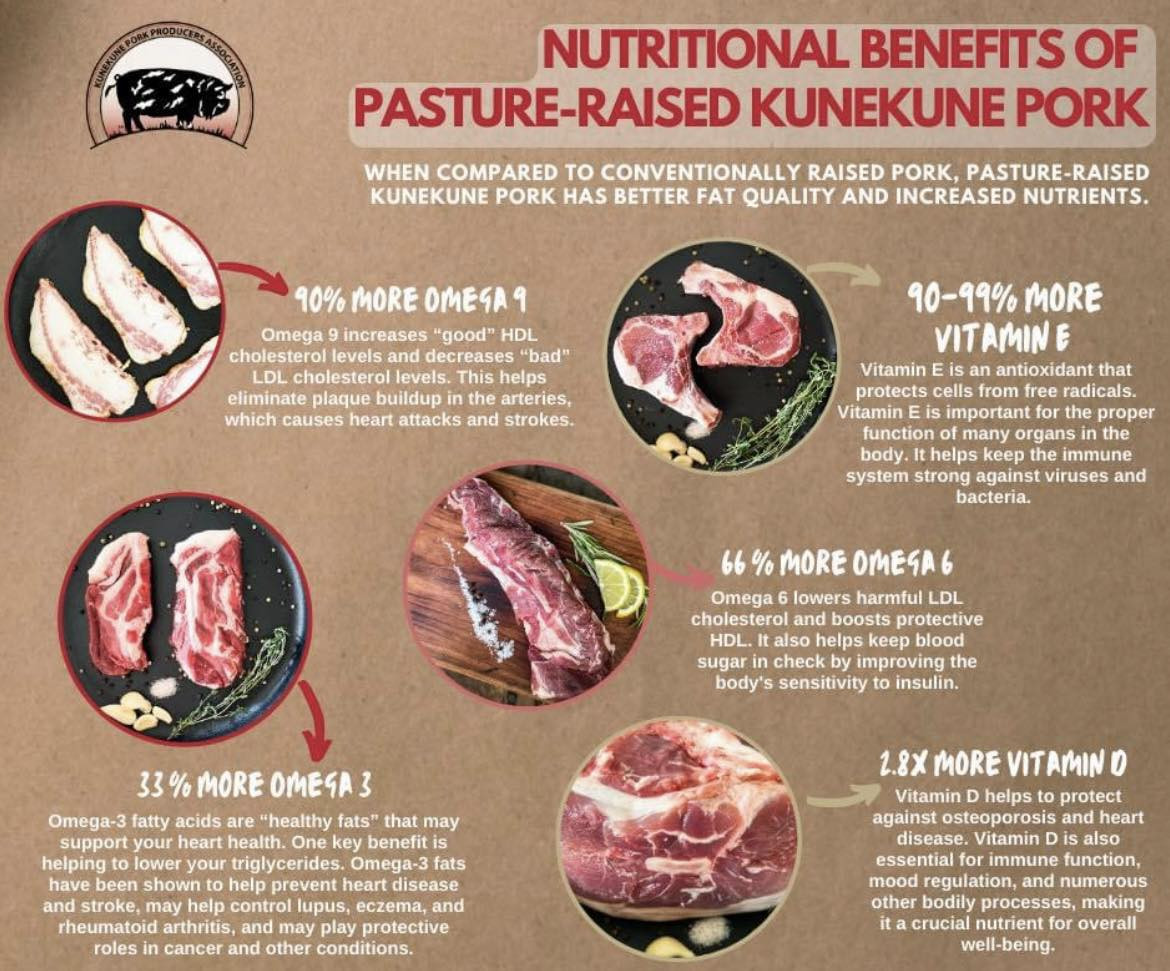
A 2023 study conducted by the Kunekune Pork Producers Association (KPPA) is highlighted in the in the image below. Click the button or the image to see a detailed overview of the study findings as to why pasture raised Kunekune pork has tested to be more nutritious than conventional pork.
How Is Kunekune Pork Different from Grocery Store Pork?
Modern commercial pork production focuses heavily on efficiency and lean growth.
Kunekune pork focuses on eating quality.
Commercial Pork
- Faster growth
- Leaner carcasses
- High-volume production
- Consistency
Kunekune Pork
- Slower growth
- More marbling
- Richer flavor
- Premium eating experience
For customers who value flavor above all else, Kunekune pork often stands apart.
Best Cuts of Kunekune Pork
Because of the breed's marbling and tenderness, many cuts perform exceptionally well.
Popular options include:
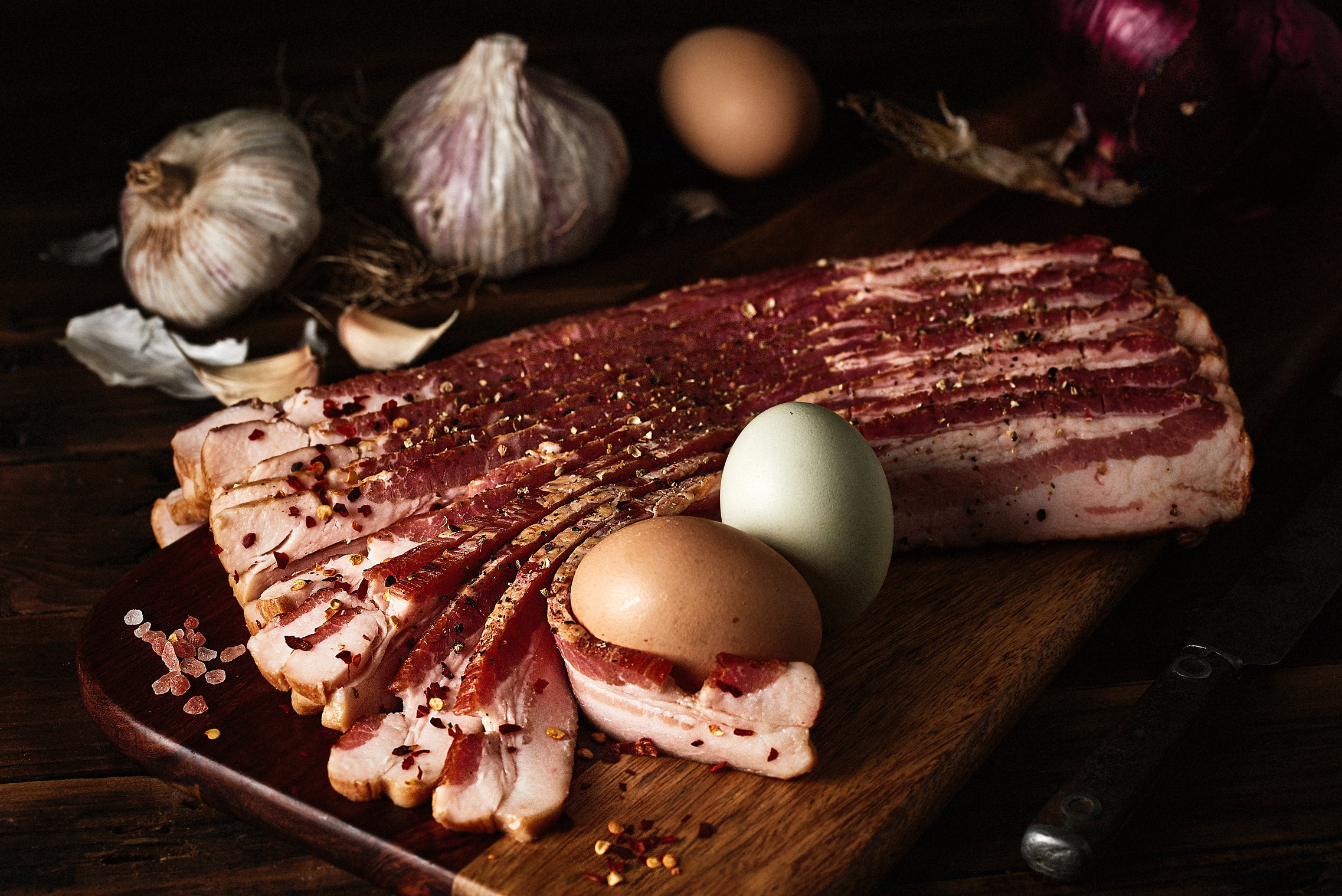
Bacon
Rich, flavorful, and highly sought after.
Pork Chops
Tender and juicy with excellent flavor.
Bratwursts and Sausage
The breed's quality fat contributes to outstanding sausage products.
Roasts
Perfect for low-and-slow cooking methods.
Ground Pork
Excellent for meatballs, burgers, breakfast sausage, and countless other recipes.
For a detailed breakdown, see our guide to the Best Cuts of Kunekune Pork.
Is Kunekune Pork Good for the Carnivore Diet?
Many carnivore diet followers appreciate Kunekune pork because of its:
- Rich flavor
- Quality fat
- Variety of cuts
- Nutrient density
The breed's natural marbling makes it particularly appealing to those seeking higher-fat meat options.
We've actually been on the carnivore diet since January of 2025 and haven't looked back. We absolutely love it and our Kunekune pork is at the center of it. Just the two of us go through about 2-3 hogs per year by ourselves.

Why Pasture-Raised Kunekune Pork Matters
At Dos Lobos Ranch, our pigs are raised on pasture where they can express natural behaviors while contributing to our regenerative farming system.
Pasture-based production allows pigs to:
- Root
- Graze
- Explore
- Interact naturally
For many customers, how their food is raised matters just as much as how it tastes.
Pigs have been overlooked in regenerative farming systems because of their tendency to be extremely destructive and require a lot of careful management. By using Kunekune pigs, which are natural grazers that root less, our pastures have responded in ways that have signaled that Kunekune pigs in particular are a crucial pillar to our pasture management system.

Why We Chose Kunekunes
We raise Kunekunes because they consistently produce the type of pork we want to eat ourselves.
We value:
- Flavor
- Tenderness
- Marbling
- Heritage genetics
- Pasture-based production
Our goal isn't to produce the fastest-growing pigs.
Our goal is to produce exceptional pork.

Frequently Asked Questions About Kunekune Pork

What is Kunekune pork?
Kunekune pork comes from the Kunekune pig, a heritage breed known for its tenderness, marbling, and rich flavor.
Does Kunekune pork taste different?
Yes. Many customers describe Kunekune pork as richer, juicier, and more flavorful than conventional pork.
Why is Kunekune pork so tender?
The breed's genetics, natural marbling, slower growth rate, and high-quality fat all contribute to tenderness.
Is Kunekune pork good for bacon?
Yes. Many customers consider bacon one of the breed's standout products due to its rich flavor and excellent fat quality.
Is Kunekune pork good for the carnivore diet?
Many carnivore diet followers enjoy Kunekune pork because of its marbling, fat content, flavor, and variety of cuts.