The Comparison Is More Than Breed
“Dexter” identifies a breed; “conventional” describes a broad production and marketing system. A fair comparison separates breed, diet, finishing, age, management, processing, aging, cut, and cooking rather than assuming one label explains everything.

Carcass and Package Size
Dexters generally produce smaller carcasses and individual cuts than many large commercial beef animals. That can suit households seeking practical portions, but actual yield depends on the animal, finish, harvest weight, cut instructions, and boning choices.

Grass Finishing and Flavor
Our Dexter cattle are grass-fed and grass-finished. Forage species, season, fat cover, age, and management affect flavor and fat color. Grain-finished beef often has a different flavor profile and more standardized finish. Conventional beef will finish on a confined feedlot for 3-6 months before slaughter. Grass-finished animals have pasture access 100% of their lives and are never grain fed or finished.

Tenderness and Cooking
Breed and genetics contribute to tenderness, but processing, aging, cut selection, slicing, doneness, and resting are critical. Grass-finished beef is often best cooked with attention to cut, internal temperature, and carryover heat. Grass-finished beef is usually leaner than grain-finished or conventional beef.
Choose Based on Verified Practices
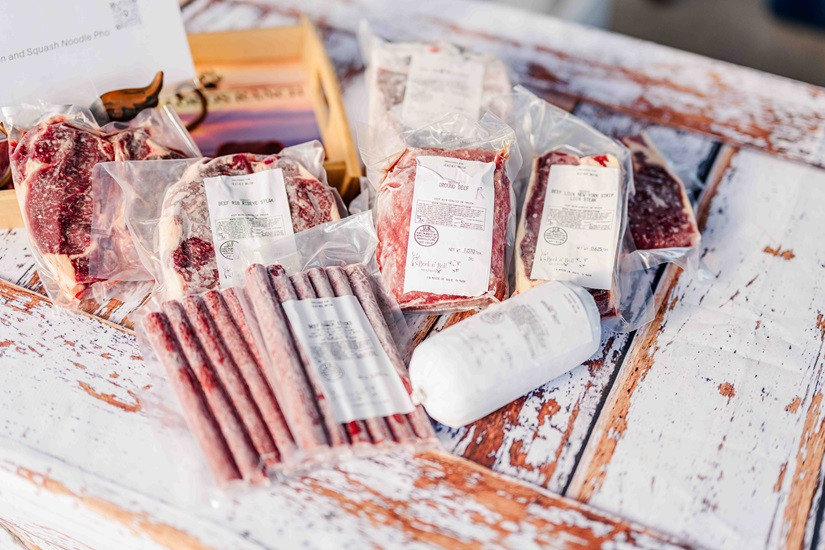
Ask how cattle were finished, what the farm tracks, how beef was aged, and which fulfillment options apply. Read our grass-finished beef guide or shop Dexter beef.

Frequently Asked Questions
Is Dexter beef always grass-finished?
No. Dexter is a breed, and individual farms choose the feeding and finishing system.
Are Dexter steaks smaller?
They are often smaller than cuts from large commercial cattle, but size varies by animal, harvest weight, and cutting instructions.
Is Dexter beef always more tender?
No breed guarantees every cut. Genetics, management, processing, aging, cut, and cooking all affect tenderness.
Why choose farm-direct Dexter beef?
Customers may value verified ranch practices, traceability, practical portions, limited-scale production, and direct communication with the producer.