Our Management Direction
Dos Lobos Ranch works without routine chemical herbicide or pesticide use. That statement describes our normal management approach; it should not be stretched into an unverified certification or a promise that every outside input, neighbor, feed ingredient, or historical land use is chemical-free.
Our Cheat Code
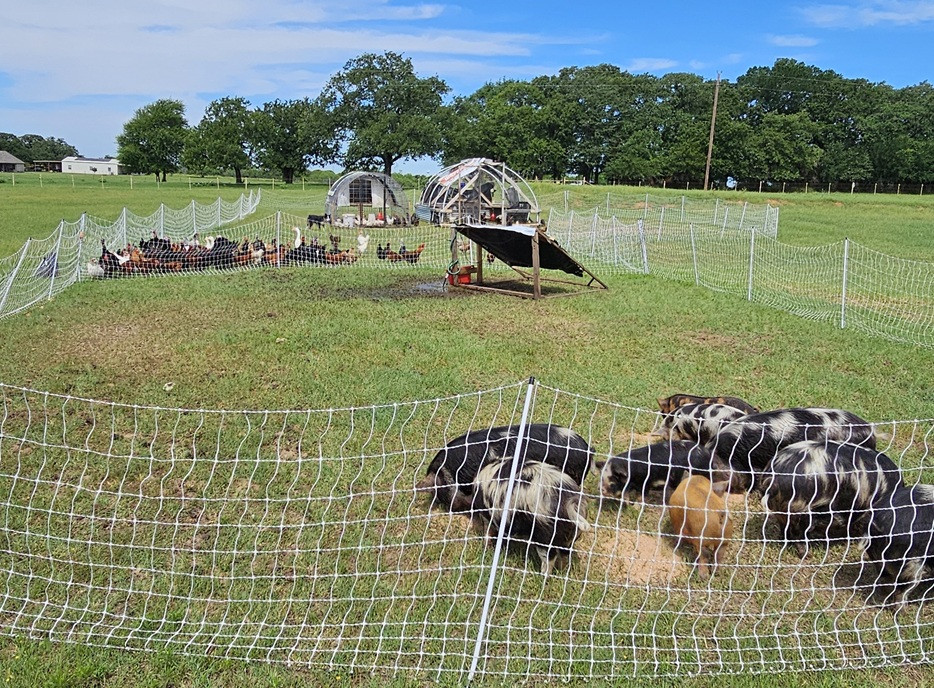
In the fall of 2024, we hired Dave from Big Little Farm to start spraying our pastures every 6-8 weeks several times per year with his homemade organic fertilizer comprised of worm compost tea, fish emulsion, sea kelp, and molasses. This simple soup inoculates our soil with loads of beneficial bacteria, microbes, fungi, and other species of soil helpers while the last 3 ingredients feed those microbes. We fully believe that this was a very beneficial short cut that helped get our soil back to the way nature intended. We believe this because the pasture has shown signs of becoming a healthy, thriving, ecosystem 2 years later as weeds have failed to return in many places, the grass has filled in, AND native prairie grasses have already begun to voluntarily return to our pasture. Combine that with multi-species adaptive grazing and every other regenerative practice we could employ, and this place has jumped into overdrive with more forage than our animals can keep up with!

Build Plant Competition
Healthy, well-timed forage competition can reduce opportunities for some unwanted plants. Maintaining cover, avoiding chronic overgrazing, encouraging desired species, and allowing recovery are long-term tools rather than instant eradication.
Use Animals and Mechanical Tools Carefully
Targeted grazing, browsing, mowing, cutting, hand removal, mulching, and timing can suppress selected plants. Each method has tradeoffs, and disturbance can spread seed or weaken desirable forage when used poorly.

Identify Before Acting
Not every unfamiliar plant is harmful, and some toxic or invasive species require urgent control. Correct identification, life cycle, animal risk, seed timing, soil conditions, and the scale of infestation should guide the response.

Transparency Over Absolutes
Ask what a farm actually applies, where, why, and how exceptions are handled. Explore our regenerative guide and production practices.

Frequently Asked Questions
Do you claim the ranch is certified organic?
No. We describe our practices without implying a certification that does not apply because we have not paid for it. However, we exceed organic certification requirements in all areas. We just don't want to pay for the certification as it's really just an additional voluntary tax to the USDA. We don't believe in paying extra taxes.
Can weeds be controlled without herbicides?
Many can be suppressed through grazing, competition, mowing, cutting, timing, and removal, though results vary by plant and site.
Are all weeds bad?
No. Some provide forage, cover, or ecological value, while others are toxic, invasive, or highly competitive. Identification matters.
Does avoiding pesticides mean pests disappear?
No. It means management emphasizes prevention, habitat, monitoring, biological balance, sanitation, and targeted non-routine responses.