What Regenerative Livestock Farming Means
Regenerative farming is a direction of management rather than a magic label. It aims to improve soil function, water cycling, plant diversity, animal welfare, and the resilience of the whole farm through observation and adaptive decisions.
Explore Regenerative Ranch Management
Follow the system from principles and grazing to soil, measurement, chemical use, and local application.

Core Management Principles
Keep living roots and protective cover when possible, minimize unnecessary disturbance, maintain diversity, integrate livestock appropriately, match stocking pressure to forage, and allow adequate recovery. The right application changes with climate, soil, season, and farm goals.
Livestock as a Management Tool
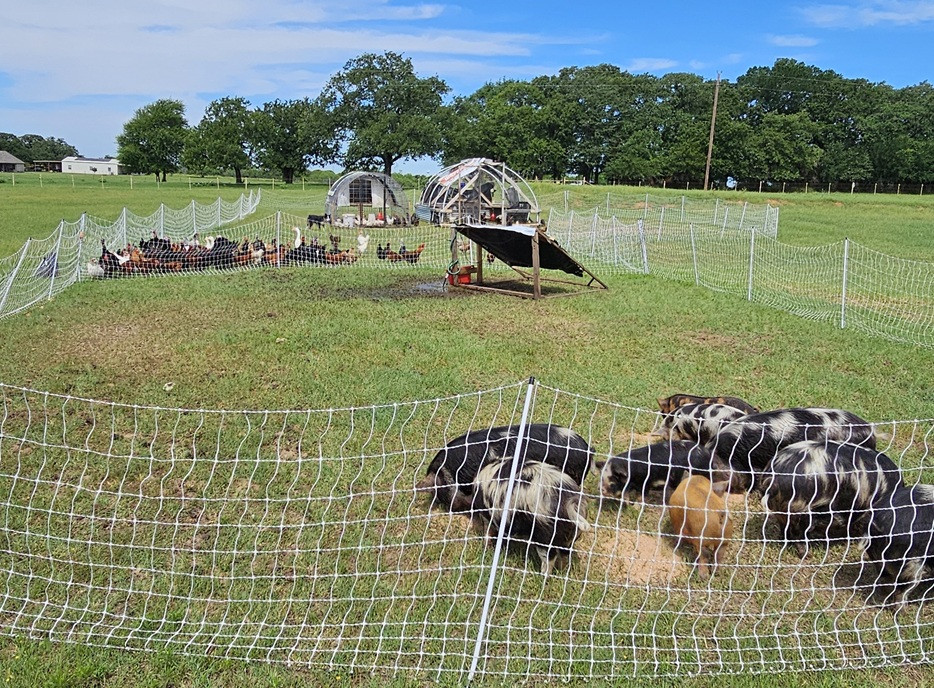
Grazing animals can harvest forage, cycle nutrients, stimulate plants, and influence succession. The same animals can also overgraze, compact wet soil, or concentrate nutrients when timing, density, recovery, and stockmanship are poor.

Measure Outcomes, Not Claims
Track ground cover, infiltration, plant composition, bare soil, erosion, forage recovery, animal performance, input use, and management observations. One photograph or practice does not prove regeneration.

Our North Texas Approach
Explore rotational grazing, soil health, and how we measure progress, or learn how we raise your food.

Frequently Asked Questions
Is regenerative farming certified?
The term may be used by certification programs, but it is also used more broadly. Ask which standards, measurements, and verification apply to a specific claim.
Is rotational grazing automatically regenerative?
No. Rotation can still overgraze plants or damage soil if stocking, timing, recovery, and conditions are poorly managed.
Can livestock improve soil?
Managed livestock can support nutrient cycling, plant response, and ground cover, but outcomes depend on management and environmental context.
How long does regeneration take?
There is no universal timeline. Starting condition, rainfall, soil, management, goals, and the outcome being measured all matter.