Let the Cut Choose the Method
Chops, shoulder, loin roasts, belly, ribs, ground pork, bacon, and sausage differ in fat, connective tissue, curing, and thickness. Use a method designed for the specific cut rather than one rule for all pork.

Thaw and Season Thoughtfully
Thaw under refrigeration and dry the surface before browning. Kunekune pork can have rich flavor and useful fat, so begin with restrained seasoning and adjust after learning the cut. Don't add fat or oil to the pan... you won't need it with Kunekune pork! There will be plenty of fat that renders out of the cut to lubricate the pan.
Use Temperature, Not Color Alone
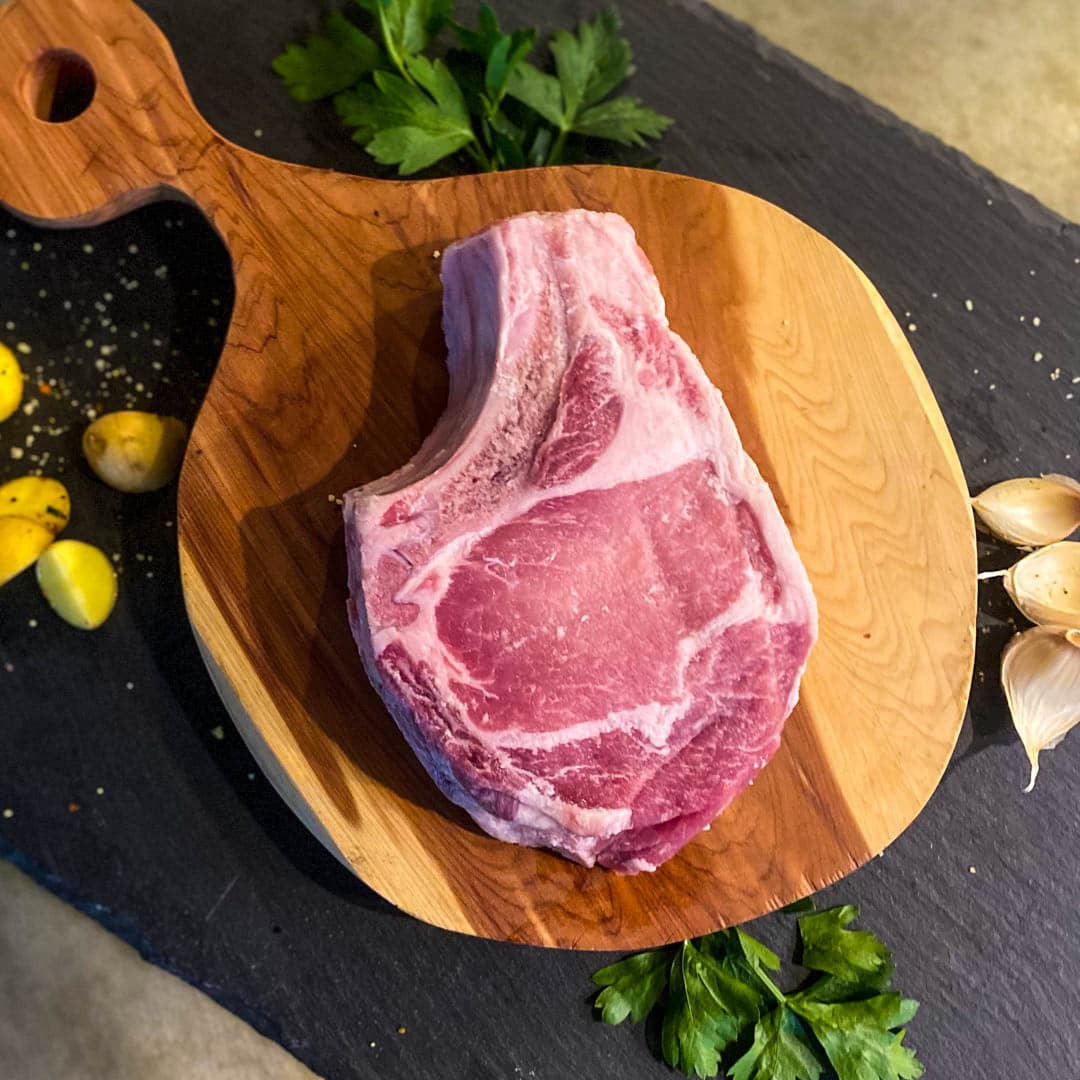
Monitor internal temperature with an accurate thermometer and follow current food-safety guidance. Ground pork and intact chops have different considerations, and carryover heat continues after removal.
Render and Protect the Fat
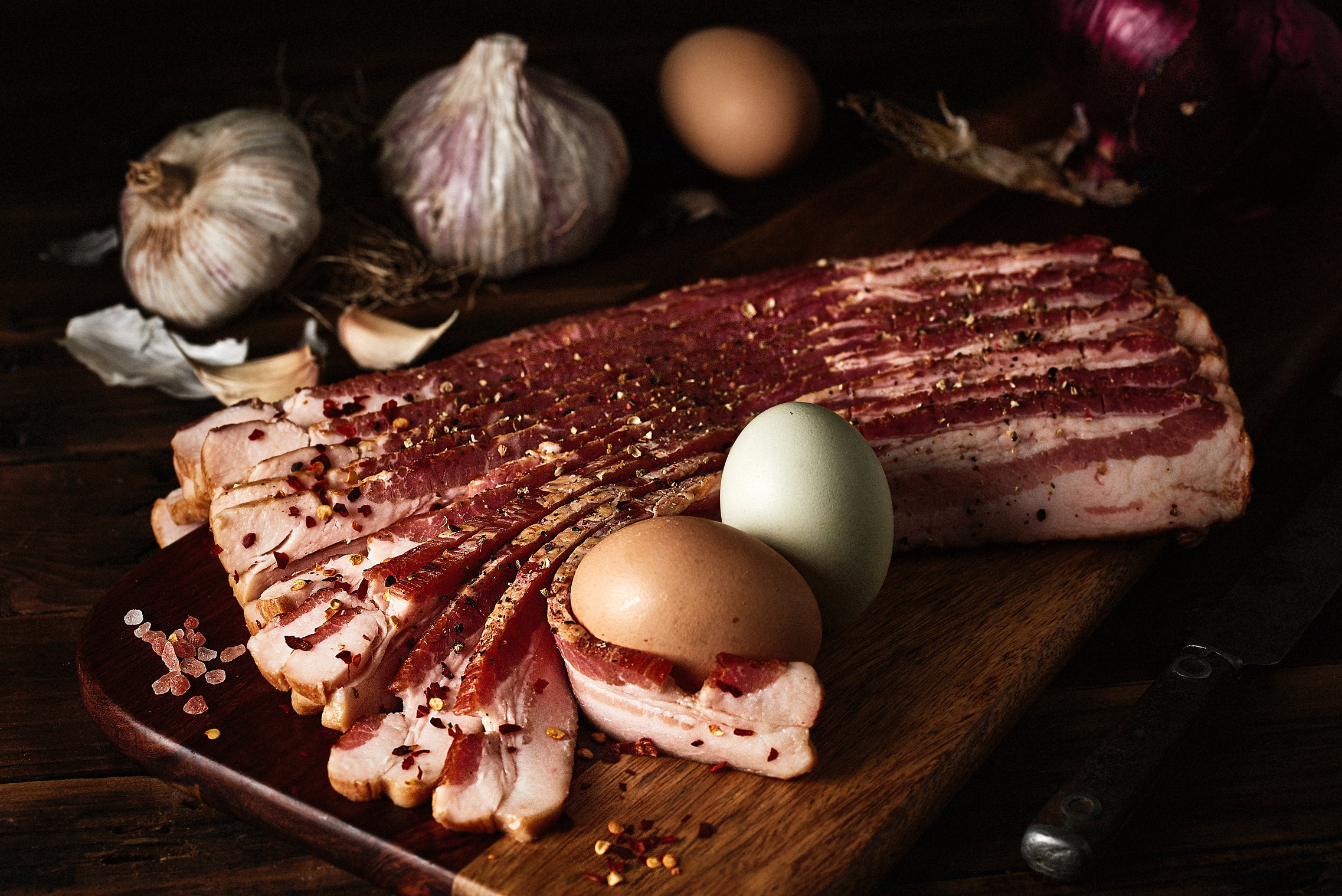
Moderate heat can render fat without burning the exterior. Shoulder, ribs, and other connective-tissue-rich cuts benefit from longer cooking, while loin and chops can dry when overcooked.

Explore Kunekune Pork
Read about the best Kunekune pork cuts, tenderness and marbling, or shop current pork.

Frequently Asked Questions
Is Kunekune pork cooked differently from commercial pork?
The same food-safety principles apply, but marbling, thickness, cut, curing, and fat level can change the best technique and timing.
How do I keep pork chops from drying out?
Use an appropriate cut thickness, controlled heat, a thermometer, carryover awareness, and a short rest rather than cooking by color alone.
Why is pork shoulder still tough?
Connective tissue needs sufficient time and temperature to soften; a shoulder can be safe yet still require more cooking for tenderness.
Can I save rendered pork fat?
Rendered fat may be strained and stored using a food-safe method, but cleanliness, moisture, temperature, and storage time matter.