Our Nigerian Dwarf Breeding Goals
At Dos Lobos Ranch, we breed registered Nigerian Dwarf goats for practical dairy use, sound structure, dependable reproduction, and manageable farm temperaments. Our goal is to produce animals that can contribute to homesteads and responsible breeding programs—not goats selected only for color, markings, or fashionable pedigrees. We also like to keep goats that can flesh easily on forage alone in order to provide meat for our family.
Every pairing is planned to preserve strengths and improve weaknesses. Registration and pedigree records guide our decisions, but the individual animal must still prove its quality through structure, health, development, and real-world performance.

Standard 1: Structural Soundness
Breeding animals should be balanced, functional, and capable of remaining sound through maturity. We evaluate feet and pasterns, leg alignment, topline, body capacity, chest width, movement, and overall proportion.
A registered goat may still be unsuitable for breeding if structural weaknesses could reduce longevity, mobility, kidding ability, or everyday usefulness.
What we want to see
- Strong, correctly aligned feet and legs
- Level, well-supported toplines
- Adequate width and body capacity
- Free, comfortable movement
- Balanced proportions appropriate to the breed

Standard 2: Dairy Character and Udder Quality
Nigerian Dwarfs are a dairy breed, so udder function matters. After a doe freshens, we consider attachment, capacity, symmetry, teat placement, ease of milking, and the way the udder holds up over time.
Pedigree and family history can suggest potential, but they do not guarantee a productive or functional udder. Mature performance carries more weight than an attractive pedigree alone.
Our dairy priorities
- Strong, durable udder attachments
- Practical teat size and placement
- Balanced capacity for household dairy use
- Comfortable, repeatable milkability
- Healthy mammary systems across successive freshenings
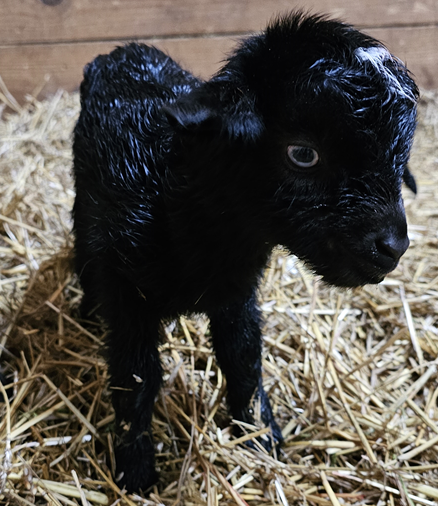
Standard 3: Temperament, Health, and Reproductive Performance
We value alert, intelligent goats that remain manageable with regular handling. Animals with unsafe or persistently difficult temperaments are poor candidates for family farms and are not favored in our breeding decisions.
Breeding animals must also demonstrate health, thriftiness, reproductive soundness, and the ability to raise vigorous offspring. Does are evaluated for kidding and maternal performance; bucks are evaluated through their own development and the consistency of their offspring.
- Manageable, breed-appropriate temperament
- Healthy growth and appropriate body condition
- Sound reproductive anatomy and performance
- Strong maternal instincts and kid-raising ability
- Offspring that consistently support program goals

How These Standards Guide Placement
Every kid is evaluated individually. Registration eligibility does not automatically mean an animal should enter a breeding program. Depending on quality and intended use, a goat may be placed as registered breeding stock, a homestead dairy prospect, a companion wether, or retained for further evaluation.
When we offer breeding stock, we explain the animal's registration status, known strengths, limitations, pedigree, and appropriate use as honestly as possible.
Meet Our Nigerian Dwarf Herd | Explore Our Breeding Program | View Current Availability | Read the Purchase Process

Frequently Asked Questions
Does ADGA registration automatically make a goat breeding quality?
No. Registration documents pedigree and eligibility, but breeding quality must still be evaluated through structure, health, temperament, dairy function, reproductive performance, and the traits an animal produces.
When can a doe be fully evaluated for udder quality?
Family history and juvenile structure provide clues, but a doe's udder can only be meaningfully evaluated after freshening. Long-term value becomes clearer across multiple lactations.
Do you breed primarily for color or markings?
No. Color may be attractive, but it does not outweigh structural soundness, dairy function, reproductive performance, health, or temperament in our breeding decisions.
How do these standards affect goat availability?
Every kid is evaluated individually. Animals may be retained, offered as registered breeding stock, placed as homestead dairy prospects, or sold as companion wethers according to their quality and best use.