Regeneration in North Texas
North Texas farms manage heat, drought, intense (or lack of) rainfall, variable soils, invasive plants, winter dormancy, and rapid seasonal changes. Practices should be adapted to local conditions rather than copied as a universal recipe.

Look Beyond the Label
Ask how animals move, how long forage recovers, how bare ground and erosion are monitored, what inputs are used, how animals are treated, and which outcomes are measured. “Regenerative” without specifics provides little purchasing information.
Livestock and Land Fit
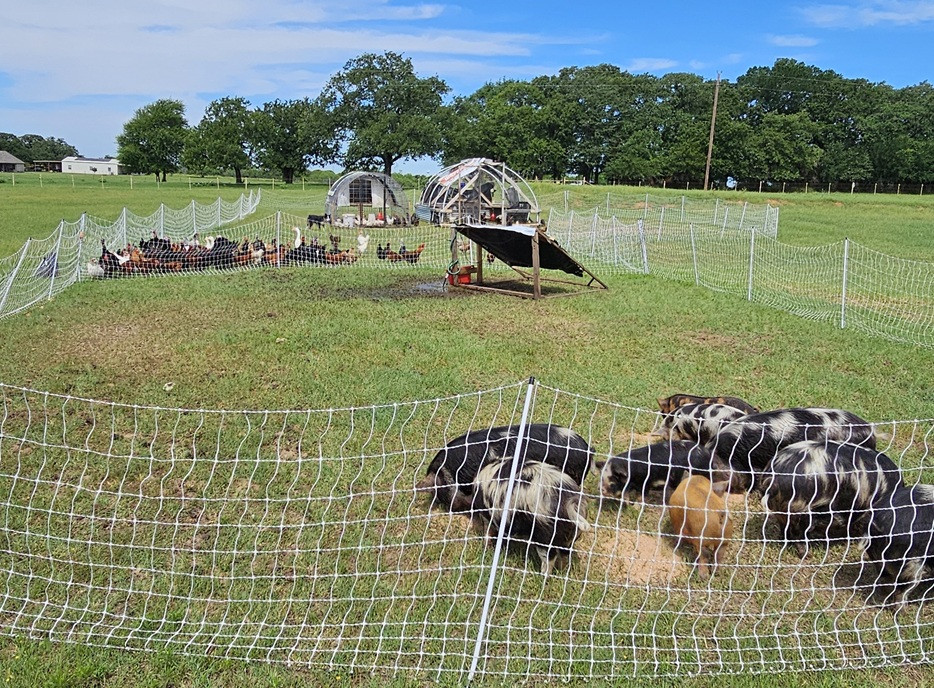
Cattle, goats, pigs, poultry, and other species affect land differently. Stocking, timing, density, water, shade, feed, fencing, and recovery determine whether their impact supports or harms the stated goal.

Buying from Local Farms
Verify product availability, feed standards, finishing claims, processing, delivery, market attendance, pickup, and shipping. Direct communication allows customers to compare practices rather than relying only on packaging.

Dos Lobos Ranch in Decatur
Dos Lobos Ranch serves North Texas with pasture-raised Kunekune pork, grass-finished Dexter beef, seasonal turkey, and breeding stock. Start with Start Here or read our regenerative guide.

Frequently Asked Questions
What makes a farm regenerative?
Look for specific management, measurements, and outcomes involving soil, water, plants, animals, and resilience rather than relying on the label alone.
Is local food automatically regenerative?
No. Local describes distance or market relationship, not management practices.
Are regenerative farms organic?
Not necessarily. Organic certification and regenerative management address overlapping but different standards.
Where is Dos Lobos Ranch?
The ranch is based in Decatur, Texas, serving much of Dallas–Fort Worth through local options and qualifying products through shipping.