
Soil Health Is Soil Function
Healthy soil should accept and store water, support roots and biology, cycle nutrients, resist erosion, and recover after disturbance. Appearance alone does not reveal every function, so field observations should be combined with repeatable measurements.

Protect the Soil Surface
Living plants, litter, and residue reduce raindrop impact, temperature extremes, evaporation, and erosion. Bare ground is a useful warning signal, especially where livestock traffic, runoff, or weak plant recovery repeatedly expose soil.

Maintain Roots and Recovery
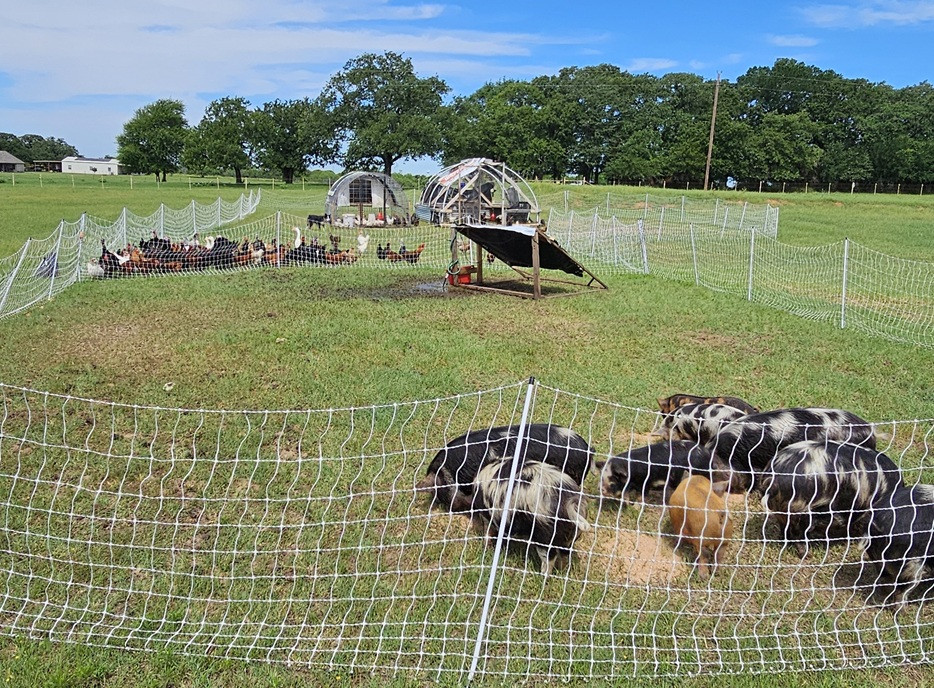
Plants need enough leaf area and time to rebuild roots after grazing. Returning too soon can weaken desirable forage even when animals move through many paddocks. Recovery must respond to growth rate rather than a fixed calendar. Likewise, aggressive regrowth needs to be managed appropriately with increased grazing rates and as livestock nutrition requirements require. A good tool we've learned to use is adding a bale of hay to slow down grazing if pasture needs more time to recover between grazes.

Watch Water and Compaction
Observe puddling, runoff, crusting, hoof impact, infiltration, and plant rooting. Animal impact can be useful under suitable conditions and damaging on saturated or chronically overused ground.
Track Change Over Time
Use fixed photo points, infiltration observations, ground-cover estimates, forage notes, and soil tests when appropriate. Continue with measuring progress and rotational grazing.
Frequently Asked Questions
Does adding compost automatically create healthy soil?
Compost can add nutrients and organic material, but soil function also depends on plants, roots, water, biology, disturbance, and ongoing management.
Is soil organic matter the only important measurement?
No. It is useful, but infiltration, aggregation, cover, rooting, erosion, biology, and plant performance also matter.
Can hooves compact soil?
Yes, especially under wet conditions or excessive pressure. Hoof impact can also incorporate litter; context and timing determine the result.
How can a small ranch monitor soil cheaply?
Use repeatable photographs, ground-cover estimates, infiltration observations, rooting checks, rainfall notes, and targeted tests rather than relying on memory.