If you've recently heard someone mention a Kunekune pig and found yourself wondering, "What's a Kunekune pig?" you're not alone.
Kunekune pigs have become increasingly popular among homesteaders, small farms, regenerative livestock producers, and food lovers thanks to their gentle temperament, manageable size, grazing ability, and exceptional pork quality.
At Dos Lobos Ranch, Kunekunes are the foundation of our pasture-raised pork program and one of our favorite livestock species to raise.

How Do You Pronounce Kunekune?
Kunekune is pronounced:
"Coo-nee Coo-nee"
The name comes from the Māori language of New Zealand and translates roughly to:
"Fat and Round"
Which is a pretty accurate description of these charming pigs.
Here at our farm, you'll hear us Tex-ify it to "coo-nee coon." People sometimes search for the breed phonetically as a “coon coon pig,” but Kunekune is the correct breed name and spelling.
Those dangling things you see hanging from their necks -- those are called wattles or "piri piri". Some Kunekunes have them and some don't. They are generally a hallmark of the breed and have no function other than they bring a little fun and "bling" to the pig.
Interested in the pork itself? Read Is Pastured Kunekune Pork Healthier?👇

Where Do Kunekune Pigs Come From?
Kunekune pigs originated in New Zealand, where they were traditionally raised by Māori communities.
Unlike many modern pig breeds that were developed for large-scale commercial production, Kunekunes were shaped as a smaller, slower-growing breed that could thrive in lower-input environments.
Today they are found throughout:
- The United States
- Canada
- Australia
- New Zealand
- Europe
and continue to grow in popularity among small farms and homesteads.

What Makes Kunekune Pigs Different?
Several traits set Kunekunes apart from many other pig breeds.
Friendly Temperament
Kunekunes are widely regarded as one of the friendliest pig breeds available.
Owners often describe them as:
- Curious
- Gentle
- Social
- Easy to handle
- Family friendly
This makes them a popular choice for first-time pig owners and small farms.

Smaller Size
Kunekunes are much smaller than many commercial pig breeds.
Typical adult weights:
Sows: 150–250 pounds
Boars: 200–400+ pounds
Their manageable size makes them easier to handle and better suited for small-acreage operations.
Here at Dos Lobos Ranch, we raise a line of Kunekune pigs called 200 in 12 which helps get the pigs to a market weight of 200 lbs. faster than typical Kunekune pigs.
Typical 200 in 12 adult weights:
Sows: 250-350+ pounds
Boars: 300-400+ pounds
These increased growth rates and carcass size makes the Kunekune more competitive and economical in the pork market.
Even with increased size and growth, the 200 in 12 pigs still maintain their gentle nature and ease on pasture, just in a more productive package.

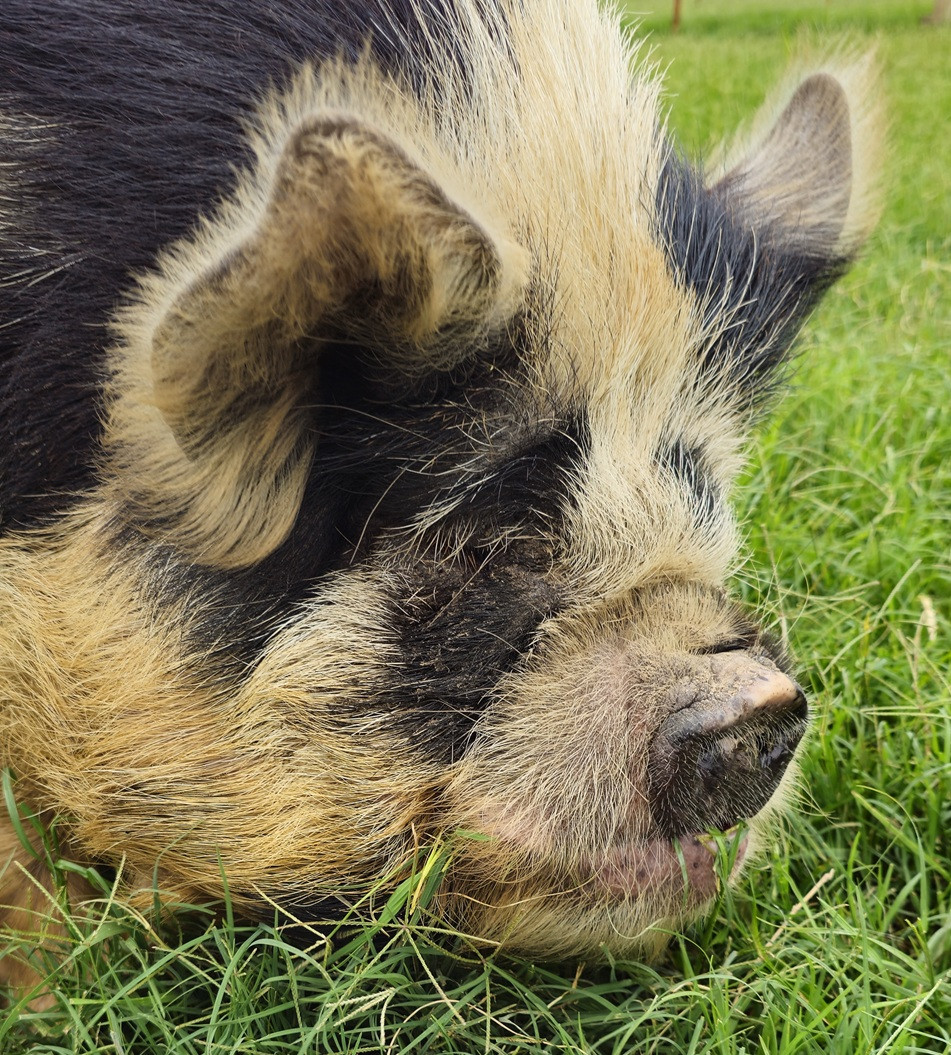
Excellent Grazers
One of the reasons Kunekunes are so popular among regenerative farms is their ability to utilize pasture.
Compared to many pig breeds, Kunekunes are often more willing to graze and forage, making them an excellent fit for pasture-based systems.
Are Kunekune Pigs Good for Meat?
Absolutely.
Although Kunekunes grow more slowly than commercial pigs, many farmers and customers believe the extra time is worth it.
Kunekune pork is known for:
- Exceptional tenderness
- Rich flavor
- Beautiful marbling
- High-quality fat
Many people describe Kunekune pork as some of the best pork they've ever tasted.

Are Kunekune Pigs Good for Homesteads?
Yes.
Kunekunes are often considered one of the best pig breeds for homesteaders because they combine:
- Manageable size
- Friendly temperament
- Grazing ability
- Quality pork production
For many small farms, they strike an ideal balance between practicality and productivity.

Why We Raise Kunekune Pigs at Dos Lobos Ranch
At Dos Lobos Ranch, we chose Kunekunes because they align with our goals of producing exceptional pork while utilizing pasture-based, regenerative farming practices.
Their combination of:
- Flavorful pork
- Heritage genetics
- Grazing ability
- Friendly personalities
makes them a natural fit for our farm.
Curious about how the breed translates to the dinner table? Read our Complete Guide to Kunekune Pork.

Want to Learn More?
If you'd like to dive deeper into the breed, check out these resources:
Frequently Asked Questions

What is a Kunekune pig?
A Kunekune is a heritage pig breed from New Zealand known for its friendly temperament, grazing ability, manageable size, and excellent pork quality.
Are Kunekune pigs friendly?
Yes. Kunekunes are considered one of the most docile and people-friendly pig breeds in the world.
Are Kunekune pigs good for meat?
Yes. Kunekune pork is highly regarded for its tenderness, flavor, and marbling.
How big do Kunekune pigs get?
Adult Kunekune pigs typically weigh between 150 and 400 pounds depending on genetics and sex.
Can Kunekune pigs live on pasture?
Yes. Kunekunes are among the best grazing pig breeds and are well suited for pasture-based farming systems.