Kunekune pigs have quietly developed a loyal following among homesteaders, small farms, regenerative livestock producers, and food lovers alike.
Known for their gentle temperament, grazing ability, exceptional meat and fat quality, and manageable size, Kunekunes are unlike almost any other pig breed available today.
Whether you are researching Kunekune pigs as pets, breeding stock, pasture-raised pork producers, or simply wondering why so many small farms are choosing this heritage breed, this guide covers everything you need to know.
New to the breed? Start with What Is a Kunekune Pig? for a beginner-friendly overview.
Explore the Kunekune Guide
Choose the part of the breed, breeding, care, or pork story that matters most to you.


What Is a Kunekune Pig?
The Kunekune (pronounced "coo-nee coo-nee") is a small lard breed heritage pig originating from New Zealand. The name "Kunekune" comes from the Māori language and translates to "fat and round," an appropriate description for these compact, friendly pigs.
Unlike many commercial pig breeds developed for confinement systems, Kunekunes were traditionally raised in low-input environments and are well known for their ability to thrive on pasture.
Today, they are popular among:
- Homesteaders
- Small farms
- Regenerative livestock producers
- Breeders
- Families seeking a manageable pig breed
- Direct-to-consumer meat farms
Why Are Kunekune Pigs So Popular?
Several characteristics make Kunekunes unique among pig breeds.
Friendly Temperament
Kunekunes are widely considered one of the most docile pig breeds in the world.
Many owners describe them as:
- Curious
- Gentle
- Easy to handle
- Social with humans
- Less aggressive than many commercial breeds
This temperament makes them attractive to families, beginning livestock owners, and small farms.
Learn how disposition develops and what breeders should evaluate in our Kunekune Temperament Guide.

Excellent Grazing Ability
Unlike many commercial pigs that rely heavily on grain, Kunekunes are known for their ability to utilize pasture effectively.
Benefits include:
- Reduced feed costs
- Improved land utilization
- Compatibility with regenerative grazing systems
- Lower environmental impact
While supplemental feed is still often used, especially for breeding animals and growing pigs, Kunekunes are among the most pasture-friendly pig breeds available. We've found that a Kunekune piglet from start to finished butcher weight costs about $100 less to feed on average than larger heritage or commercial breeds.
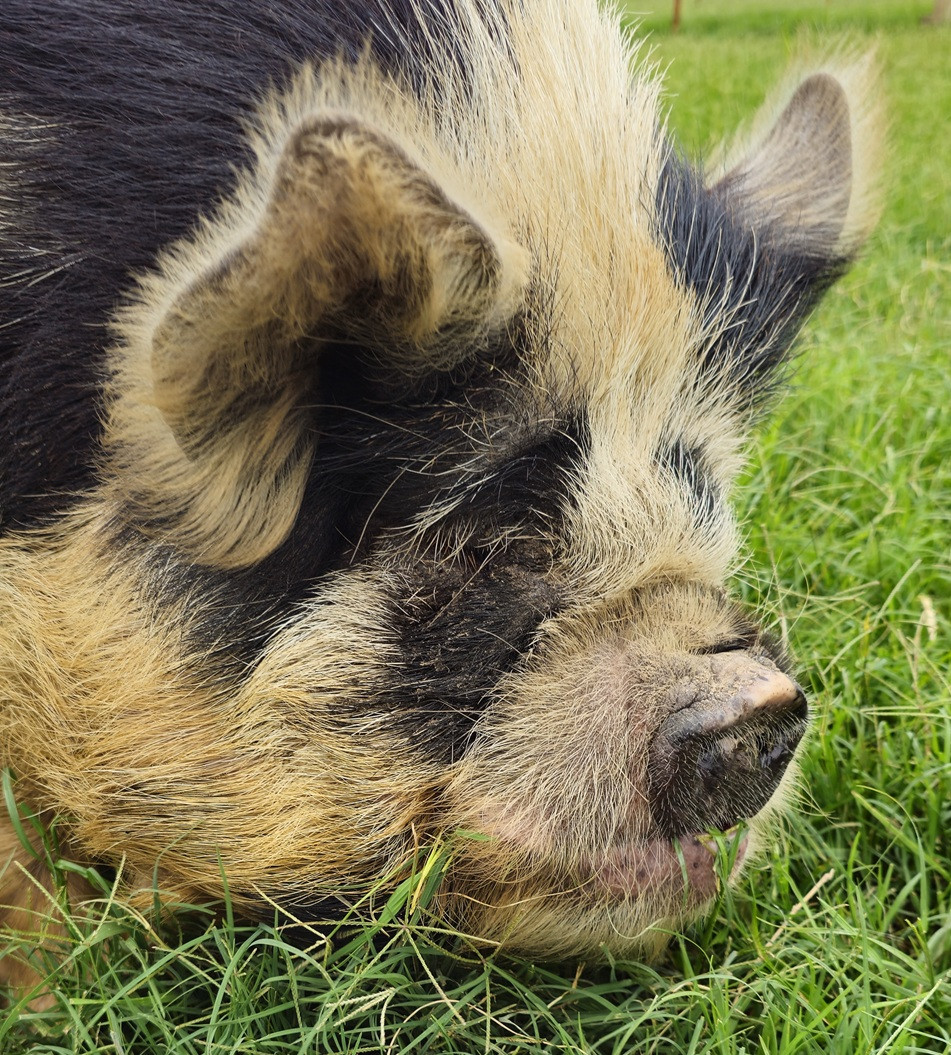
Smaller Size
Kunekunes are significantly smaller than many commercial pig breeds, but they are anything but a miniature pig. They are considered a medium-sized breed.
Advantages include:
- Easier fencing requirements
- Lower feed consumption
- Simpler handling
- Better fit for small acreage farms
This manageable size has helped drive their popularity among homesteaders and small-scale livestock producers.

Are Kunekune Pigs Good for Meat?
Absolutely.
While Kunekunes grow more slowly than commercial pigs, they are highly valued for their meat quality.
Many customers describe Kunekune pork as:
- Tender
- Flavorful
- Well marbled
- Rich without being greasy
The breed's slower growth and natural fat deposition contribute to a unique eating experience that many customers prefer over conventional pork.
At Dos Lobos Ranch, Kunekune pork is the foundation of our pasture-raised pork program because we believe flavor and meat quality matters.
Some people are turned off to the Kunekune for being a lard breed. The good news is there are breeders selecting away from the enormous fat yield on Kunekunes to a leaner, meatier pig. We've found that we prefer a balanced pig with both a good meat yield and good lard yield.
Learn more about the meat itself in our Complete Guide to Kunekune Pork.

What Does Kunekune Pork Taste Like?
Kunekune pork is often described as:
- Richer than conventional pork
- More flavorful
- Exceptionally tender
- Well balanced in fat content
Because the breed naturally develops intramuscular fat, many cuts remain juicy and flavorful even when cooked thoroughly.
Popular products include:
- Bacon
- Bratwursts
- Pork chops
- Ground pork
- Roasts
- Hog shares
Learn how heritage breed genetics may influence pork quality in Is Pastured Kunekune Pork Healthier?👇

How Large Do Kunekune Pigs Get?
Adult size varies based on genetics, management, and feeding practices.
Typical mature weights from traditional lines:
Sows: 150–250 pounds
Boars: 200–300+ pounds
Some bloodlines can exceed these averages, such as the selectively bred 200 in 12 lines like we have at Dos Lobos Ranch. The goal is for the pig to reach market weight of 200 pounds in 12 months, or better.
Typical mature weights from 200 in 12 lines:
Sows: 250-350+ pounds
Boars: 300-450+ pounds
Compared to commercial pigs that may reach 600–800 pounds, Kunekunes remain relatively compact and manageable.
Some breeders are breaking into 300 in 12 territory with intense focus on carcass merit, growth rate, and pork production, though breeding stock is not yet readily available.

How Long Do Kunekune Pigs Take to Grow?
Kunekunes are a slow-growing heritage breed, and many breeders want to keep them that way while others are trying to find a happy-medium with growth rate for market hogs.
While commercial pigs may reach market weight in six months, older lines of Kunekunes typically require:
- 15-18 months for meat production
- Longer for breeding stock development
This slower growth contributes to:
- Improved meat quality
- Better marbling
- More developed flavor
Pigs from 200 in 12 lines have been selective bred to:
- Shorten meat production time to 9-14 months
- Shorter breeding stock development
While the grow-out time has been significantly shortened, a pig that takes 12 months to reach market weight still hits the mark for:
- Improved meat quality
- Marbling
- Flavor
Because Kunekunes grow more slowly than commercial pigs, many customers choose to reserve pork months in advance through our Whole Hog Share Program.

Are Kunekune Pigs Good for Homesteads?
Kunekunes are often considered one of the best pig breeds for homesteaders because they combine:
- Manageable size
- Grazing ability
- Friendly temperament
- Quality pork production
For small-acreage farms, these traits make them a practical and enjoyable livestock choice.
Even our 200 in 12 line pigs have maintained their gentle nature, respect for fences, and grazing ability, with the added bonus of better economic value through improved growth rate and carcass yield.
Planning your own herd? Continue with our Complete Guide to Raising Kunekune Pigs for feeding, fencing, shelter, pasture, and daily management. When you are ready to compare animals and availability, visit Kunekune Pigs for Sale Near Me.

Kunekune Pigs and Regenerative Agriculture
Kunekunes fit naturally into many regenerative farming systems.
When properly managed, they can help:
- Convert forage into food
- Utilize marginal land
- Support diversified farm enterprises
- Provide locally raised pork for direct-to-consumer sales
Like any livestock species, management matters, but their grazing ability makes them particularly attractive for pasture-based operations.
In talking with other breeders in the region and around the country, we've heard that many pastures can support up to 40 Kunekune pigs per acre on average because of their gentleness on the land. We've found the same to be true here on our tiny 10 acre ranch in North Texas.

Why We Raise Kunekune Pigs at Dos Lobos Ranch
At Dos Lobos Ranch, we chose Kunekunes because they align with our goals:
- Exceptional pork and fat quality
- Pasture-based production
- Heritage genetics
- Manageable livestock systems
- Direct relationships with customers
Our focus is producing premium pasture-raised pork while preserving and improving the land for future generations.
Looking to Try Kunekune Pork?
Explore:
- Whole Hog Share
- Half Hog Share
- Pay-As-It-Grows Hog Share
- Kunekune Pork Products

Kunekune Pigs vs Berkshires and Others
Kunekune vs Other Pig Breeds
Are Kunekunes the right fit for your farm? What is the best pig breed for homesteads? What is the best pig breed for pastured pork?
If we lost the entire Kunekune population as a breed today, Berkshire or Idaho Pasture Pigs would be our fallback for pastured pork quality in our opinion. This is a quick comparison table between Kunekunes vs Berkshire vs Commercial Cross breeds.
| Trait | Kunekune | Berkshire | Commercial Cross |
|---|---|---|---|
| Growth Rate | Slow | Moderate | Fast ⭐ |
| Meat Quality | Excellent tenderness and flavor ⭐ | Excellent flavor and marbling ⭐ | Consistent but often milder flavor |
| Grazing Ability | Excellent ⭐ | Moderate | Low to moderate |
| Feed Consumption | Lower overall intake ⭐ | Moderate | Higher due to rapid growth |
| Adult Size | Small to medium | Medium to large | Large ⭐ |
| Temperament | Very docile and friendly ⭐ | Generally good | Varies by genetics and handling |
| Homestead Friendly | Excellent ⭐ | Good | Fair |
| Best Fit | Small farms, homesteads, premium pasture pork, breeding stock | Pork programs and heritage pork farms | High-volume pork production |

Related Kunekune Resources
Frequently Asked Questions About Kunekune Pigs
What is a Kunekune pig?
A Kunekune is a heritage pig breed from New Zealand known for its friendly temperament, grazing ability, manageable size, and excellent meat quality.
Are Kunekune pigs good for meat?
Yes. Kunekunes are highly regarded for producing flavorful, tender, and well-marbled pork.
How big do Kunekune pigs get?
Most adult Kunekune pigs weigh between 150 and 400 pounds depending on genetics, sex, and management.
Are Kunekune pigs friendly?
Yes. Kunekunes are considered one of the most docile and people-friendly pig breeds.
Can Kunekune pigs live on pasture?
Yes. Kunekunes are among the best grazing pig breeds and can effectively utilize pasture as part of their diet.
How long does it take to raise a Kunekune pig for meat?
Most Kunekune pigs require approximately 9 to 14 months to reach processing size depending on genetics and feeding practices.
Are Kunekune pigs good for homesteaders?
Yes. Their manageable size, friendly temperament, grazing ability, and meat quality make them popular among homesteaders and small farms.
More Kunekune Guides
Continue your research with these focused guides from our Kunekune breeder and pork resource library.
- Why We Raise Kunekunes
- Kunekune Breed Standard Explained
- Kunekune Housing, Fencing and Shelter
- Kunekune Size, Weight and Growth
- Kunekune Growth and Processing Timeline
- Kunekune Pig Cost Guide
- Kunekunes as Pets vs Livestock
- Kunekune vs Pot-Bellied Pigs
- Kunekune Farrowing Guide
- Kunekune Pig FAQ
- Kunekune Meat Quality & Tenderness
- Kunekune Pork vs Commercial Pork
- How to Cook Kunekune Pork