
Why Kunekunes Fit Our Ranch
We chose Kunekunes because their temperament, grazing behavior, manageable mature size, maternal ability, and exceptional pork quality align with a diversified regenerative livestock operation.
They are not maintenance-free miniature pigs. They are capable heritage livestock that reward thoughtful selection, appropriate nutrition, secure infrastructure, and hands-on management.

A Pig That Works With Pasture
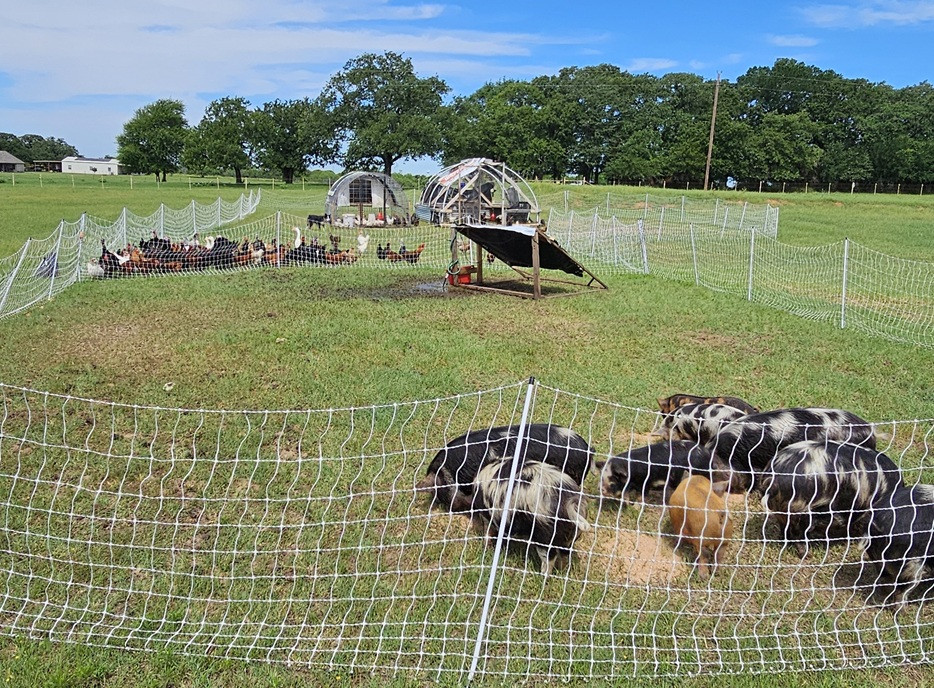
Kunekunes can harvest meaningful forage and tend to be less destructive than many larger commercial-type pigs when stocking density, rotation, soil moisture, and feed are managed well. We use pigs as one tool within a broader regenerative system—not as a shortcut that replaces planning.
- Rotational grazing distributes impact and recovery.
- Pasture adds behavioral enrichment and dietary diversity.
- Shade, wallows, shelter, water, and balanced feed remain essential.
- Observation protects both animal condition and soil cover.
Breeding for Function and Pork Quality
Our breeding program prioritizes sound feet and legs, body capacity, reproductive function, calm temperament, genetic diversity, and carcass merit. We use pedigree information, structural evaluation, genetic testing, mature-relative performance, and offspring data to improve each generation.
Explore our functional Kunekune standard, the complete structure guide, meet our herd, or learn about Kunekune pork.

Frequently Asked Questions
Why did you choose Kunekunes instead of commercial pigs?
Kunekunes fit our pasture-based scale, temperament goals, direct-market pork program, and interest in preserving functional heritage genetics.
Do Kunekunes destroy pasture?
Any pig can damage soil when stocking density, duration, moisture, or feed placement is poorly managed. Rotation and observation are essential.
Are Kunekunes only pets?
No. They can be companion animals, productive homestead pigs, registered breeding stock, and high-quality pork animals.
What traits matter most in your breeding program?
We prioritize whole-animal function: sound movement, feet and legs, body capacity, reproductive reliability, temperament, genetic diversity, and useful carcass traits.