Our Kunekune Breeding Program
At Dos Lobos Ranch, we raise registered Kunekune pigs with a clear purpose: to produce functional, pasture-suited animals that can improve the breed, perform in real farm systems, and produce exceptional pork.
Our breeding program goes far beyond color, wattles, or a pedigree certificate. We evaluate structure, growth, teat quality, temperament, mothering ability, milk production, fertility, tenderness genetics, and the performance of entire family lines.
Every breeding decision is part of a long-term effort to produce Kunekunes that are practical for serious breeders, homesteaders, pasture-based farms, and families who value sound livestock with documented potential.

Quick Answer: What Is the Dos Lobos Ranch Kunekune Breeding Program?
Our Kunekune breeding program selects registered pigs for functional structure, dependable reproduction, strong mothering ability, usable teat lines, calm temperament, improved growth, pasture performance, and excellent pork quality.
We do not believe every pig should become breeding stock. Animals must earn a place in the breeding program by meeting standards that support both long-term herd improvement and real-world usefulness.

The Dos Lobos Functional Kunekune Standard
Our goal is to produce a moderate, structurally sound Kunekune that thrives on pasture, grows efficiently for the breed, reproduces reliably, raises a strong litter, remains calm and manageable, and produces tender, richly flavored pork.
Sound Structure
Strong feet, correct legs, functional pasterns, balanced movement, adequate body length, and enough frame to remain productive.
Reliable Reproduction
Fertility, strong maternal instincts, adequate milk, functional udders, and the ability to raise a healthy litter.
Improved Growth
Piglets that grow steadily without losing the moderate, pasture-suited character that makes the breed valuable.
Excellent Temperament
Calm, friendly, manageable pigs that are pleasant to live with and safer for farms and families.
Pork Quality
Genetics selected for tenderness, rich flavor, usable fat, and a carcass that serves both farm families and direct-to-consumer meat programs.
Pasture Function
Animals capable of thriving in a pasture-based system while remaining efficient, hardy, and practical.
Learn what goes into the pricing and long-term value of our breeding-quality piglets.

What We Select For
No single trait determines whether a pig belongs in our breeding program. We look at the whole animal, the performance of its parents, its littermates, and the family line behind it.
| Selection Trait | What We Evaluate | Why It Matters |
|---|---|---|
| Structure | Feet, legs, pasterns, topline, body length, balance, and movement | Sound pigs are more likely to remain productive and travel comfortably on pasture. |
| Teat Quality | Count, spacing, symmetry, placement, and functionality | Adequate functional teats support larger litters and reduce competition among nursing piglets. |
| Growth | Birth weight, weaning weight, monthly gain, frame, and yearling trajectory | Improved growth helps make Kunekunes more practical for meat production and sustainable farm businesses. |
| Mothering Ability | Farrowing ease, milk, attentiveness, litter survival, and piglet growth | A sow should raise a strong litter without creating unnecessary work or preventable losses. |
| Temperament | Friendliness, manageability, confidence, and behavior around people | Temperament affects safety, daily management, veterinary care, and the buyer's long-term experience. |
| Pork Quality | Tenderness genetics, flavor, fat quality, and usable carcass traits | Kunekunes should remain useful livestock capable of producing exceptional pork. |
| Pedigree | Registration, ancestry, coefficient of inbreeding, and family performance | Documented pedigrees support thoughtful pairings, genetic diversity, and predictable improvement. |

Our Gilt and Sow Standard
A gilt must meet the complete standard before she is retained or offered as premium breeding stock. One attractive trait does not outweigh weaknesses elsewhere.
- Growth trajectory capable of approaching our 200-pound-at-12-month goal.
- A functional teat line, with 7/7 preferred and 6/6 considered only when the rest of the animal is especially strong.
- Correct feet, legs, pasterns, movement, topline, and body proportions.
- A dam with dependable mothering ability, milk production, and litter performance.
- Calm, friendly, manageable temperament.
- A pedigree and pairing that support the direction of the overall breeding program.
If a gilt does not meet the full standard, she may still be an excellent feeder, or production animal. Registration alone does not make her breeding quality.

Our Herd Boar Standard
A herd boar can influence dozens of offspring, so the standard for males is intentionally strict.
- A true functional 7/7 teat line is required for future herd boars or a 6/6 when other features are strong.
- Excellent feet, legs, pasterns, movement, and structural balance.
- Strong but moderate growth without sacrificing soundness.
- Calm temperament and easy daily handling.
- A pedigree that complements our females and manages line breeding responsibly.
- Family performance that supports fertility, mothering ability, growth, and pork quality.
- Tenderness genetics that preserve or improve the eating quality of future offspring.
A boar must contribute more than novelty, color, or a famous bloodline. He must offer measurable value to the next generation.

Automatic Culls
Our acronym is easy to remember: EAT-UM.
Any of the following reasons will send a pig or piglet directly to the freezer and out of the pool for potential breeding stock that we use or sell.
- Escapees: any pig that consistently finds a way to break out of a pen or the the perimeter fence.
- Attitude: unreasonably fearful, difficult to handle, or aggressive individuals go directly to the meat herd or our smoker if they're fast tracking to it.
- Teats: blind teats, poor spacing, supernumerary teats, a saggy udder with poor support that the sow steps on, or sows that can't feed a litter get scheduled for a butcher date.
- Unsuitable Structure, Health, or Production: twisted toes, poor leg structure, hooves that won't self-trim/wear, severe teeth underbite, retained testicles, consistently throwing piglets with hernias, consistent illness/immunity issues, or other reproductive performance issues.
- Maternal Issues: dams that can't feed a litter, are too aggressive towards piglets, won't lay down to properly expose teats, high losses of piglets, mothers who aren't careful and consistently lay on piglets, weaning an underfed/undersized litter or forcing us to use a surrogate dam (if available).
Some animals will be given a prolonged chance to improve performance (for example: if we had a weak spot in the fence, that's our fault -- but if we have an indestructible fence and the animal still forces its way out, it's going to freezer camp). Dams that under-perform at first farrowing will be given a pass and re-evaluated at their 2nd farrowing. If they continue to have performance issues, we will consider them for rehoming depending upon the severity, or they will go to our personal freezer.
The breeding pool is great enough with pigs that we can always give another prospect a shot.

Our Growth Selection Program
Traditional Kunekunes are known for slower growth, but growth rate has a major effect on whether the breed remains practical for farms producing pork.
Our initial benchmark is the 200 in 12 goal: producing pigs capable of reaching approximately 200 pounds by 12 months of age while remaining sound, moderate, and true to the functional character of the breed.
That goal has already been achieved within our program. Our longer-term objective is to continue improving efficient growth through carefully selected genetics without creating oversized, structurally compromised pigs.
We don't weigh every individual in each litter. We pick the top breeding prospects that meet the above phenotypical and behavioral criteria in the previous section and then track weights beginning at weaning and continue weigh-ins if they keep their place in the breeding prospect pool.
| Growth Measure | Why We Track It |
|---|---|
| Weaning Weight | Reflects milk production, mothering ability, and early piglet performance. |
| Average Weekly Gain | Shows whether an animal is progressing steadily toward practical production goals. |
| Yearling Weight | Provides a consistent benchmark for comparing animals and family lines. |
| Structural Development | Ensures faster growth is not coming at the expense of feet, legs, movement, or longevity. |
Tenderness Genetics and Pork Quality
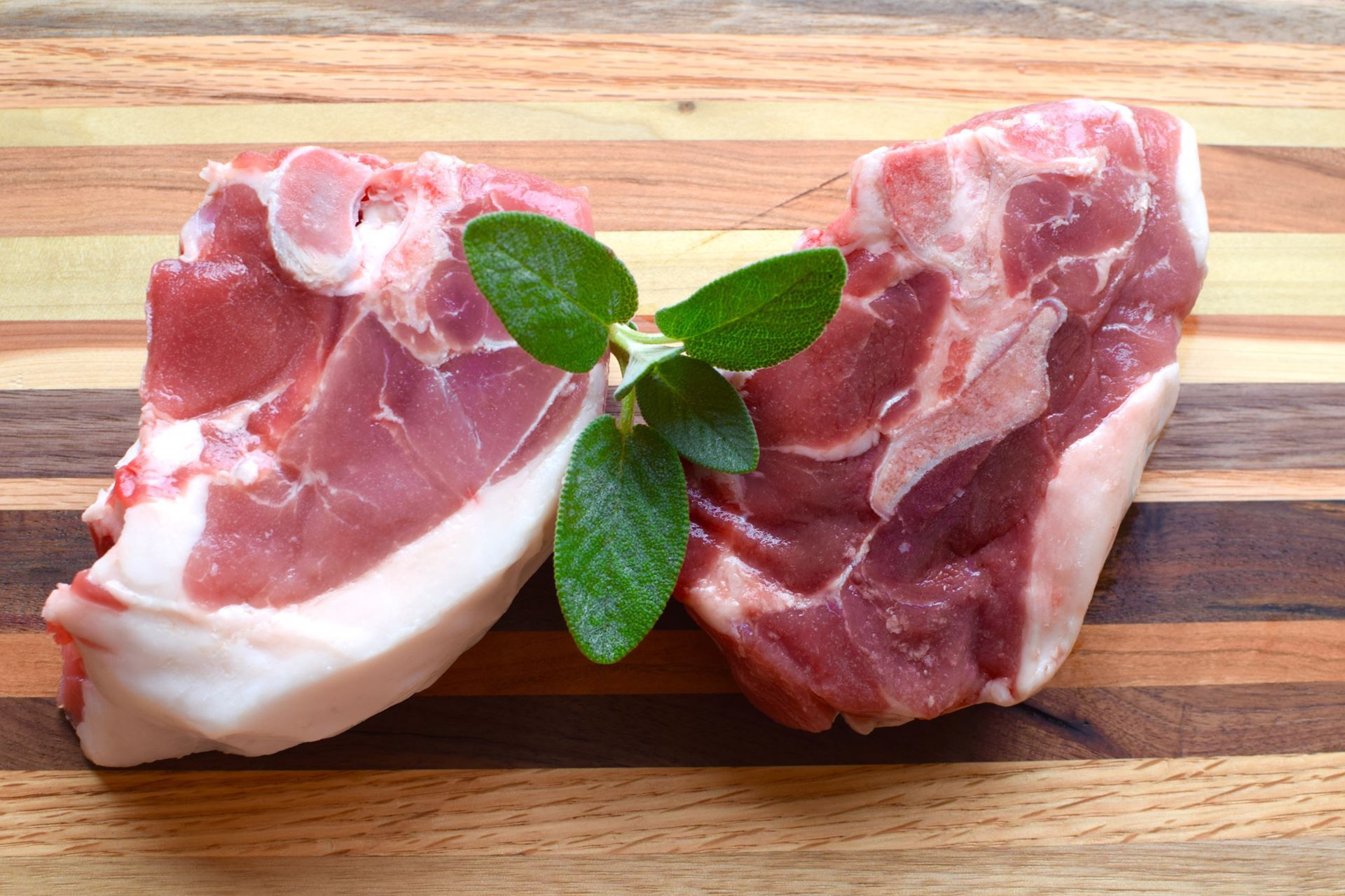
A Kunekune breeding program should not lose sight of the reason pigs have traditionally been raised: food.
We use genetic tenderness testing to help evaluate our breeding animals and make more informed pairings. Tenderness is not the only factor that influences eating quality, but it gives us another useful tool for preserving one of the breed's greatest strengths.
Our retained replacement gilts for our personal program must be expected to score at least 9 for tenderness. We also evaluate the tenderness potential of boars, sows, and planned pairings so that structural and growth improvements do not accidentally reduce pork quality.
Why Tenderness Matters
- Breeding animals shape the eating quality of future generations.
- Tender pork supports direct-to-consumer farms and repeat meat customers.
- Documented genetics provide more information than appearance alone.
- Meat quality helps preserve the Kunekune as useful livestock rather than a novelty breed.
- We adopted genetic tenderness testing because our first Dexter cattle that we butchered left us severely disappointed in meat quality and lost us customers. We now genetically test both our cattle and our pigs for tenderness as a result.

Mothering Ability and Litter Performance
A productive sow should do more than become pregnant and deliver piglets. She should farrow safely, produce enough milk, remain attentive without becoming dangerous, and raise a vigorous litter.
We evaluate the sow as well as the litter because piglet performance is influenced by both genetics and maternal ability.
| Maternal Trait | What Good Performance Looks Like |
|---|---|
| Farrowing Ability | Delivers a healthy litter with minimal intervention whenever possible. |
| Milk Production | Supports even growth and strong weaning weights throughout the litter. |
| Attentiveness | Protects and cares for piglets without becoming unsafe or excessively reactive. |
| Piglet Survival | Raises a high percentage of the litter successfully to weaning. |
| Litter Growth | Produces vigorous, consistently growing piglets rather than one or two standouts surrounded by weak littermates. |

Why Registration and Pedigrees Matter
Registration does not guarantee quality, but it provides the documented foundation needed for serious breeding decisions.
A reliable pedigree helps breeders understand ancestry, avoid accidental close breeding, evaluate family lines, calculate coefficients of inbreeding, and make more informed pairings.
Our breeding-quality Kunekunes are registered through the American Kunekune Pig Society when eligible. Buyers receive the information needed to understand the animal they are purchasing and how it may fit into their own program.
We will not sell breeding quality animals as unregistered.

Not Every Pig Becomes Breeding Stock
One of the most important responsibilities of a breeder is deciding which animals should reproduce and which should serve another useful role.
We do not sell every registered or registerable piglet as breeding stock. Some animals are better suited as feeders, roasters, or pasture-raised pork.
Reasons a pig may not be retained or offered as breeding quality can include:
- Insufficient or poorly placed functional teats.
- Weak feet, legs, pasterns, or movement.
- Growth that falls substantially behind littermates.
- Poor temperament or difficult handling.
- Family history that does not support our breeding goals.
- Reproductive, maternal, or structural concerns.
- A pairing that does not provide enough genetic value to the next generation.
Being sold as a feeder or production pig is not a failure. It is an honest placement that protects the long-term quality of the breed.

We are a pork production farm first and breeding stock farm second.
We built our farm and our program on feeding our local community quality, pasture raised pork.
If we offer any animal on our Sale Barn page, it's because we firmly believe that animal truly deserves a shot in a program somewhere.

Transparency in Our Breeding Program
We believe prospective buyers deserve more than polished photographs and vague promises.
When appropriate, our listings may include parentage, date of birth, registration status, teat count, coefficient of inbreeding, weights, growth rate, tenderness information, structural observations, known weaknesses, and the reason an animal is priced or classified a certain way.
No breeding animal is perfect. Honest breeders should be willing to discuss both strengths and limitations so buyers can decide whether an animal truly fits their goals.
That said, we believe in the Pareto 80/20 Principle. If an animal checks 8 out of 10 boxes as a breeding prospect, it deserves to be moved out of the meat herd and either kept for ourselves or offered for sale to other farms.
We also won't hold out hope for eventual sale either. If we don't have room for a nice breeding prospect in our own herd that was offered for sale, we will move it back into the meat herd at 6 months of age for boars as roasters or 12 months of age for gilts.

Who Our Kunekunes Are Best For
Our breeding stock is intended for buyers who want documented genetics and understand that building a good herd requires more than purchasing the cheapest available pigs.
- Established Kunekune breeders seeking complementary genetics.
- New breeders willing to learn about pedigrees, structure, teat quality, and responsible pairings.
- Homesteaders who want registered pigs with practical production value.
- Pasture-based farms building a premium heritage pork program.
- Buyers who value honest records, careful selection, and ongoing improvement.
Looking for Kunekune Breeding Stock?
View currently available animals, explore upcoming litters, or contact us about the traits and genetics you are seeking.
View Available Animals Kunekune Piglets in Texas Contact Dos Lobos Ranch


Frequently Asked Questions
What makes a Kunekune breeding quality?
A breeding-quality Kunekune should combine sound structure, functional teat lines, good temperament, appropriate growth, a useful pedigree, and family performance that supports fertility, mothering ability, and pork quality.
Are all registered Kunekunes breeding quality?
No. Registration documents ancestry, but it does not guarantee that an animal has the structure, temperament, teat quality, growth, or reproductive potential needed for responsible breeding.
What teat count do you require?
We prefer 7/7 teat lines for replacement gilts and require a true functional 7/7 teat line for future herd boars. A strong 6/6 female or male may still be considered when the complete animal offers exceptional value.
What is the 200 in 12 goal?
The 200 in 12 benchmark refers to producing Kunekune pigs capable of reaching approximately 200 pounds by 12 months of age while remaining structurally sound, moderate, and functional.
Do you test Kunekunes for tenderness?
Yes. We use genetic tenderness testing as one part of our breeding decisions.
Do you sell every piglet as registered breeding stock?
No. Piglets that do not meet our breeding standards may be sold as feeders, roasters, or production animals rather than breeding stock.
Where is Dos Lobos Ranch located?
Dos Lobos Ranch is located in Wise County, Texas. We work with buyers throughout Texas and may coordinate with approved livestock transporters for qualified homes farther away.