What the Kunekune Breed Standard Describes
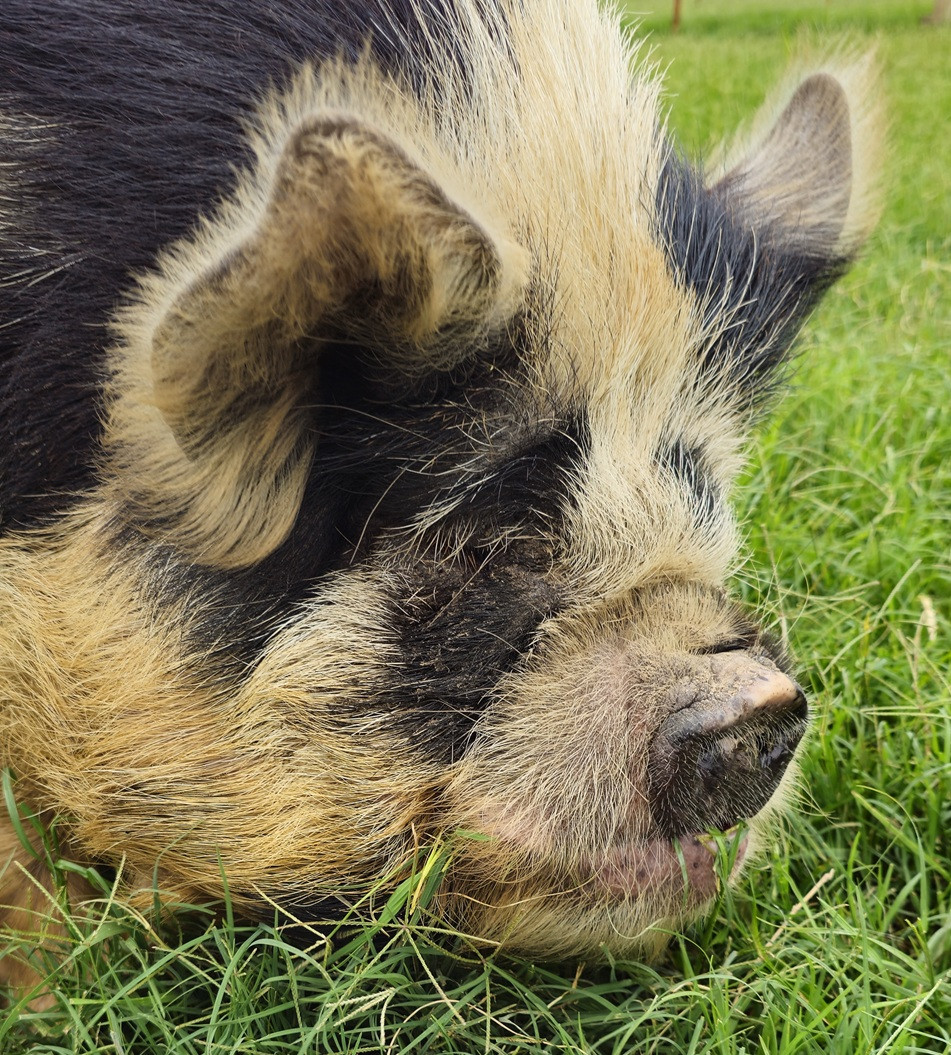
The Kunekune breed standard describes the recognizable type and essential characteristics that distinguish a true Kunekune from other pigs. It gives breeders a common language for evaluating the head, snout, ears, wattles, body, legs, feet, coat, color, and overall balance.
Kunekunes are supposed to be "fat and round" by type as a lard pig. Care must be taken not to overfeed them because many of them do get obese on air.
Quick answer: The standard is a starting point for preserving breed identity. It should be read alongside sound structure, health, fertility, temperament, and proven performance.
Dos Lobos Ranch is an AKKPS Exclusive Breeder and we focus on a pork-type Kunekune. The AKKPS Breed Standard is pretty relaxed and leaves plenty of liberty for members to pursue their own goals for their breeding program.

Core Kunekune Breed Characteristics
- A short, dished snout that supports the characteristic Kunekune head.
- A deep, compact body with useful length, width, and capacity.
- Strong legs and even feet that allow comfortable pasture movement.
- A broad range of accepted colors and coat patterns.
- Piri piri, or wattles, when present; their absence alone does not define the quality of the whole pig, though some registries require them.
No single trait should outweigh the balance and function of the animal.
Breed Type Is Not the Same as Breeding Quality
Registration verifies recorded ancestry and eligibility under registry rules. It does not guarantee that every registered pig should reproduce. Responsible selection also considers bite, teat quality, reproductive soundness, movement, growth, body capacity, muscling, disposition, and family performance.
At Dos Lobos Ranch, we evaluate the complete animal and use genetic and performance information to support—not replace—hands-on assessment.

How to Evaluate a Kunekune as a Whole
Begin with breed character, then study the pig standing and moving on level ground. Look from the side, front, and rear. Compare proportions rather than chasing a single measurement, and revisit young pigs as they mature because growth can temporarily change balance.
Continue with our Kunekune Structure Guide and functional Kunekune standard.

Use the Standard to Protect the Future of the Breed
Return to The Complete Guide to Kunekune Pigs
A useful standard helps buyers ask better questions and helps breeders make consistent, documented decisions. The goal is not cosmetic uniformity; it is preserving recognizable Kunekune type in pigs capable of thriving, breeding, and producing under real farm conditions.

Frequently Asked Questions
Who sets the Kunekune breed standard?
Kunekune registries and breed organizations publish standards for their members. Breeders should consult the current standard used by the registry in which their animals are recorded.
Are wattles required on a Kunekune pig?
Wattles are a characteristic Kunekune trait, but their presence or absence should be interpreted under the applicable registry standard and never used as the only measure of quality.
Does color determine Kunekune quality?
No. Accepted colors and patterns are part of breed diversity, but structure, health, fertility, temperament, and performance matter far more than a preferred color.
Is every registered Kunekune breeding quality?
No. Registration documents pedigree; breeding quality requires a separate evaluation of structure, reproductive soundness, health, temperament, and performance.