What Housing Do Kunekunes Need?
Kunekunes do not need an elaborate barn, but they do need a dry, draft-protected place to rest, dependable shade, clean water, secure fencing, and enough space to separate sleeping, feeding, watering, and manure areas. Housing should fit the number, age, sex, and purpose of the pigs.
Quick answer: A simple shelter works when it stays dry, is large enough for every pig to lie down comfortably, and remains safe through North Texas heat, wind, storms, and winter cold.

Choose Fencing for the Pig and the Property
Woven wire, livestock panels, electric wire, or combinations can work when installed correctly. Train pigs to electric fencing inside a secure physical boundary before relying on it in larger paddocks. Check gates, corners, low spots, and areas where soil buildup can short a wire or create an escape route.
- Use spacing that contains piglets as well as adults.
- Protect pigs from dogs and other predators.
- Separate boars, breeding groups, and new arrivals when needed.
- Inspect fencing routinely rather than waiting for an escape.
What Works For Us
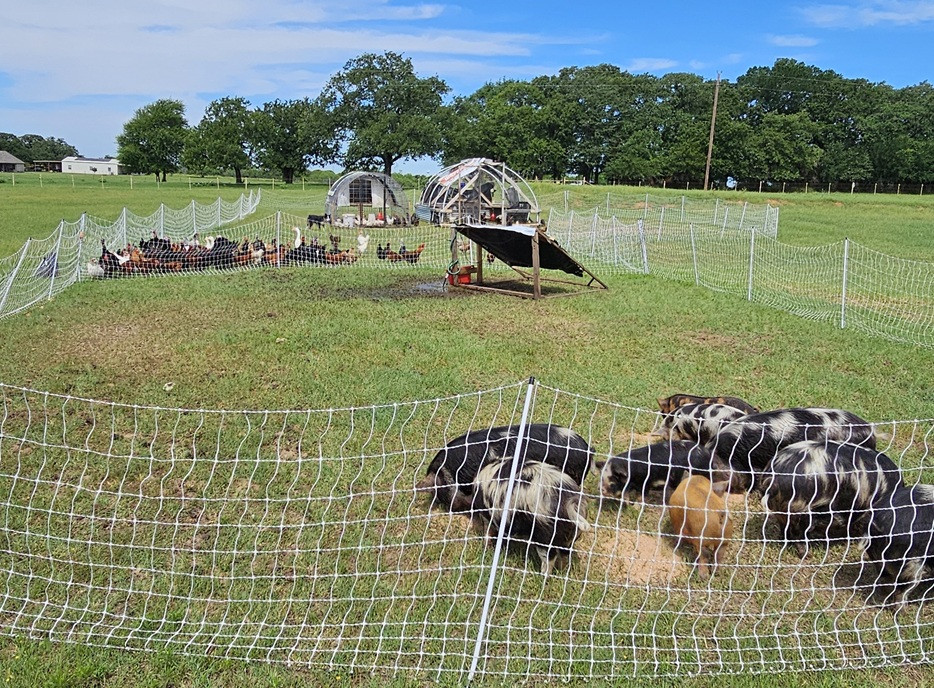
Of the dozens of pigs we've raised here over a few years, we've found that woven goat wire/no-climb fencing is adequate to hold Kunekunes for the most part. They also respect electric netting just fine. We've only had one escapee and he went in the freezer very shortly after because he was escaping multiple times per day through a weak spot that our other pigs could care less existed.
Design a Dry, Usable Shelter
Place shelters above drainage paths and orient openings away from prevailing winter wind when possible. Use safe bedding, remove wet material, and provide ventilation without creating a direct draft at pig level. Avoid sharp edges, exposed fasteners, loose wire, and gaps where a pig can trap a leg or head.
In summer, prioritize airflow and shade. In winter, prioritize dryness and protection from wind; deep bedding can help, but damp bedding quickly becomes a liability.

Manage Heat, Mud, Water, and Traffic
Pigs need reliable cooling during hot weather. Shade, airflow, and a managed wallow are essential for pigs, especially in Texas. Stabilize areas around waterers, feeders, and gates to reduce deep mud, hoof problems, wasted feed, and nutrient concentration.
Keep a dry holding or sacrifice area for severe weather and pasture recovery. Overcrowding turns even good infrastructure into a sanitation and welfare problem.

Plan Before the Pigs Arrive
Finish fencing, test water delivery, bed the shelter, prepare a quarantine area, and decide how animals will be loaded or handled before bringing pigs home. Housing is easier to improve without pigs pushing on gates or standing in the work area.
Continue with our Pasture and Grazing Guide, Feeding Guide, and Livestock Transport and Pickup Guide.

Frequently Asked Questions
Do Kunekunes need a barn?
Not necessarily. They need a safe, dry, ventilated shelter with shade and weather protection; a well-built field shelter can meet those needs.
Can electric fencing contain Kunekune pigs?
Yes, after careful training and when the system is properly energized and maintained. A physical perimeter adds important protection, especially during training.
How much shelter space is required?
Enough for every pig to lie down comfortably without piling, blocking an entrance, or forcing subordinate animals outside. Climate, group size, and bedding management affect the practical requirement.
Do Kunekunes need a wallow?
They need effective cooling in hot weather. A managed wallow can help, but it must not replace clean drinking water or create uncontrolled mud around the entire paddock.