Kunekunes as Grazing Pigs
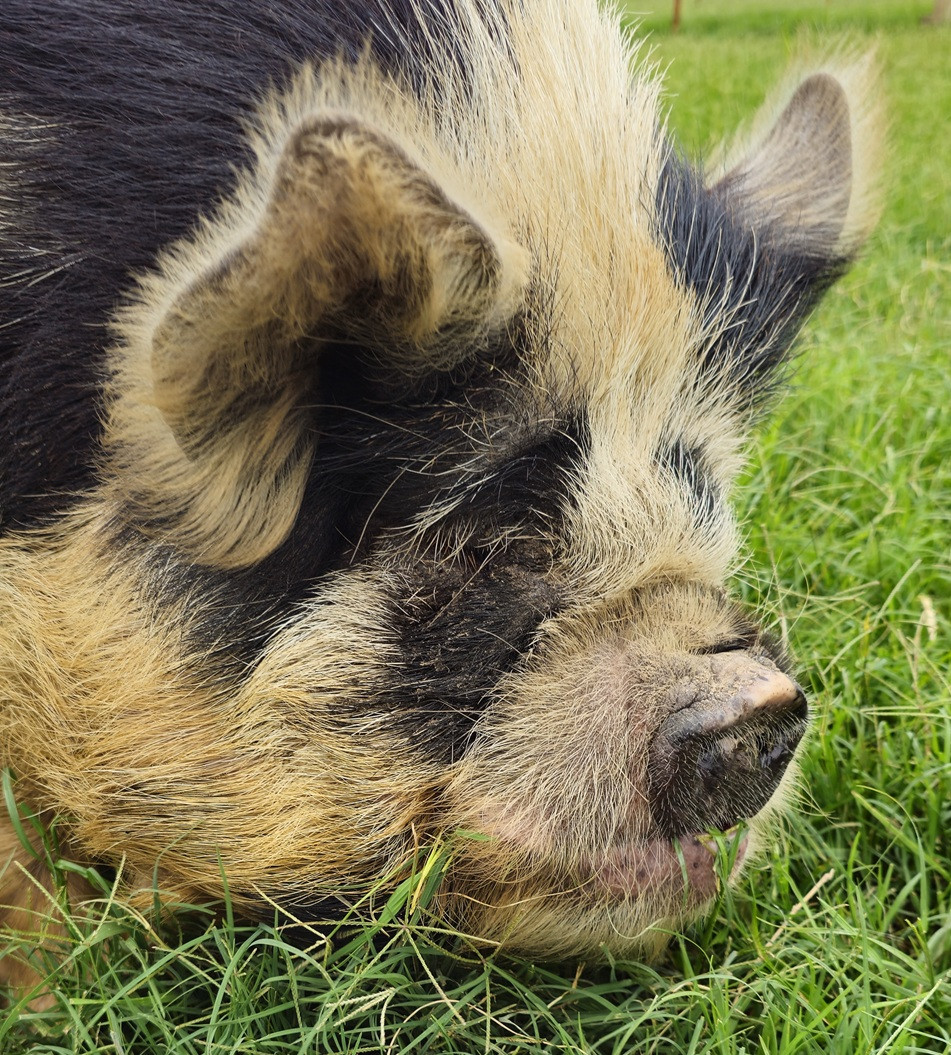
Kunekunes are well suited to pasture-based systems because they readily graze grasses, legumes, and other tender forage. That does not make them maintenance-free or eliminate the need for a balanced ration. Pasture quality, stocking density, soil moisture, season, and the pigs’ life stage determine how much nutrition the paddock can contribute.
Quick answer: Use grazing as one part of a managed feeding and land-care system, not as permission to leave pigs continuously on the same ground.
Rotate for Forage Recovery
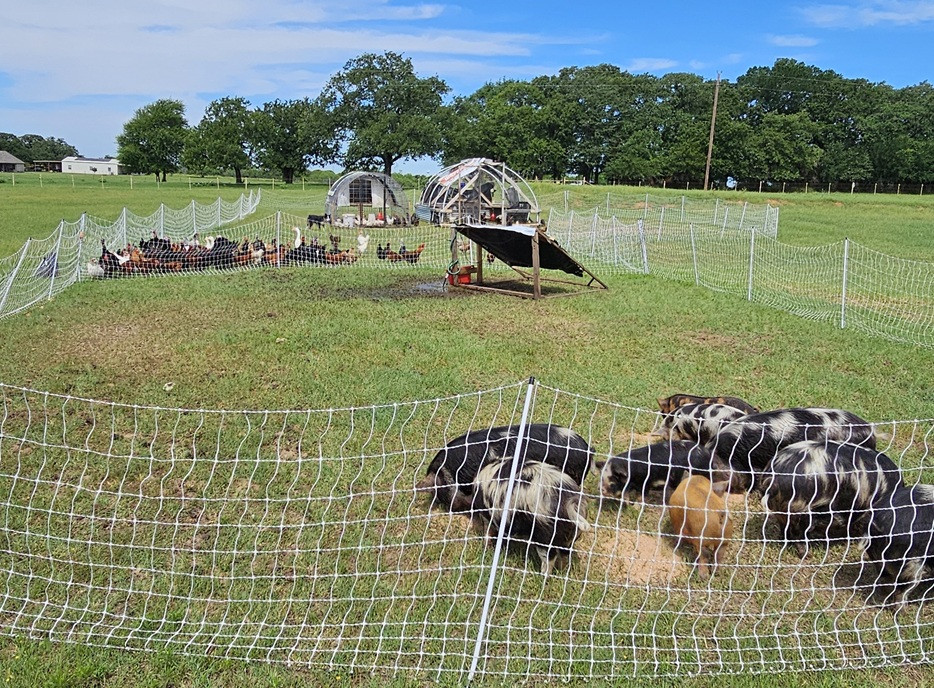
Move pigs before they graze plants below a useful residual or turn frequently traveled areas into bare soil. Recovery time matters more than a rigid calendar: warm, actively growing forage may recover quickly, while drought, cold, or overgrazed pasture needs much longer.
- Use smaller paddocks to control where pigs spend time.
- Move water, shade, and feed points when possible.
- Rest grazed areas until plants rebuild leaf area and roots.
- Reduce stocking pressure when growth slows.
Stocking Rate and Density: How Many Kunekunes Can the Land Support?
The rule of thumb in Texas is 1 animal unit per acre, or 1,000 lbs. of animal per acre. We followed that closely with our pigs for a long time. We increased it when we noticed that 1,000 lbs. of Kunekunes in a 50 ft. x 50 ft. breeding pen had zero vegetation loss. And I mean that -- ZERO. So, we started pushing it in 2026. It has yet to break. We keep roughly 20-30 pigs of various ages on 1-2 acres at a time currently and it has yet to have an impact. In fact, the weeds got out of control despite the amount of pigs on it, so we had to brush hog it.
We've heard similar stories from Kunekune breeders in similar climates to Texas having grass so tall that they can hardly see 40 pigs on one acre. So, we'll keep pushing it until the land says to back off.
Manage Rooting, Mud, and High-Traffic Areas
Kunekunes generally graze more than many pig types, but any pig can root—especially where soil is soft, forage is scarce, minerals are imbalanced, or feed has been scattered on the ground. Gates, shelters, wallows, waterers, and feeding stations receive concentrated pressure and may need gravel, mats, wood chips, or scheduled relocation.
Rooting is information. Correct the cause before simply moving the pigs to another paddock where the same damage will repeat.
We've found that the higher the quality the feed, the less the pig tends to root and to stay full throughout the day. We use feed from a local mill that contains Fertrell minerals, one of the best quality vitamin and mineral companies in America with 100% U.S. sourced ingredients.

Water, Shade, Parasites, and Seasonal Limits
Provide clean water every day and dependable shade during North Texas heat. Wallows can support cooling but should not become the only drinking source. Watch parasite pressure, body condition, manure consistency, coughing, skin problems, and declining growth. Rotation can reduce exposure, but it does not replace fecal testing, quarantine, sanitation, or veterinary guidance.
During drought, winter dormancy, or pasture recovery, increase hay or balanced feed as appropriate and protect the soil rather than forcing pigs to harvest forage that is no longer there.

Build a Whole-System Grazing Plan
Match the number and class of pigs to the acreage, water system, fencing, shade, and recovery capacity you actually have. Keep a sacrifice area for periods when pasture should not be grazed, and record move dates so recovery decisions are based on observations rather than memory.
Continue with the Kunekune Feeding Guide, housing, fencing, and shelter, and our Rotational Grazing Guide.

Frequently Asked Questions
Can Kunekunes live on pasture year-round?
They can use pasture through much of the year, but forage quantity and quality change. Supplemental feed, hay, and a sacrifice area may be necessary during drought, winter, or recovery periods.
Do Kunekune pigs root?
Yes. They often graze heavily, but they remain pigs and may root when forage is limited, soil is soft, or high-traffic areas are poorly managed.
How often should paddocks be rotated?
There is no universal schedule. Move pigs according to forage residual, soil condition, weather, stocking pressure, and the recovery needs of the plants.
Does rotation eliminate parasites?
No. Thoughtful rotation can reduce exposure, but quarantine, sanitation, testing, observation, and veterinary guidance remain important.