What Multi-Species Grazing Is
Multi-species grazing uses two or more livestock species on the same land, together or in sequence. Different diets and behaviors can broaden forage use, but the system adds fencing, nutrition, parasite, handling, and infrastructure complexity.

Different Animals Use Land Differently
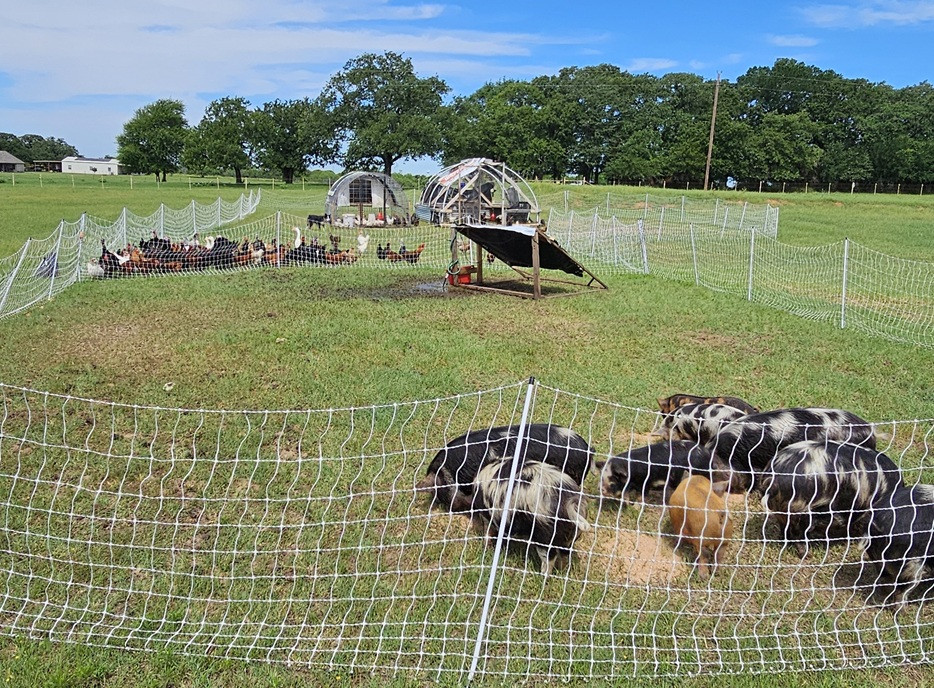
Cattle primarily graze grasses and forbs, goats browse many woody and broadleaf plants, while pigs root or disturb soil while also grazing and foraging, and poultry scratch and scatter manure and plant debris. Breed, age, season, training, and available feed change those patterns.
Parasites and Health
Some parasite cycles are species-specific, so alternating species may change exposure. It is not a cure-all: goats and cattle can share some health concerns, and each species still requires monitoring, sanitation, quarantine, and targeted care.

Fencing, Water and Nutrition
A fence that contains cattle may not contain goats or pigs. Water access, minerals, shelters, feeders, and guardian strategies must be safe for every species without allowing harmful cross-consumption.

Use Disturbance Carefully
Match species, sequence, density, duration, and recovery to the site. See rotational grazing and our regenerative livestock guide.

Frequently Asked Questions
Do cattle, goats, and pigs eat the same plants?
Their preferences overlap but differ. Availability, season, age, breed, and experience also affect what each animal eats.
Does multi-species grazing eliminate parasites?
No. It may alter some exposure patterns, but monitoring and species-appropriate parasite management remain necessary.
Can all species share minerals?
Not automatically. Mineral needs and toxicity risks differ, so feeders and formulations must be managed by species.
Should different species graze together or sequentially?
Either can work. Safety, fencing, guardian animals, forage goals, disease risk, and management capacity determine the better approach.