The Difference Is the Production System
Pasture-raised and conventional pork can come from healthy pigs and skilled farmers, but the systems organize space, labor, feed, manure, and animal behavior differently. Conventional production emphasizes consistency and efficiency at scale. Pasture-based farms rely more heavily on land, rotation, weather management, and direct observation.
Quick answer: The label alone does not tell the whole story. Ask how the pigs actually lived and what they ate.
Housing, Movement, and Natural Behavior
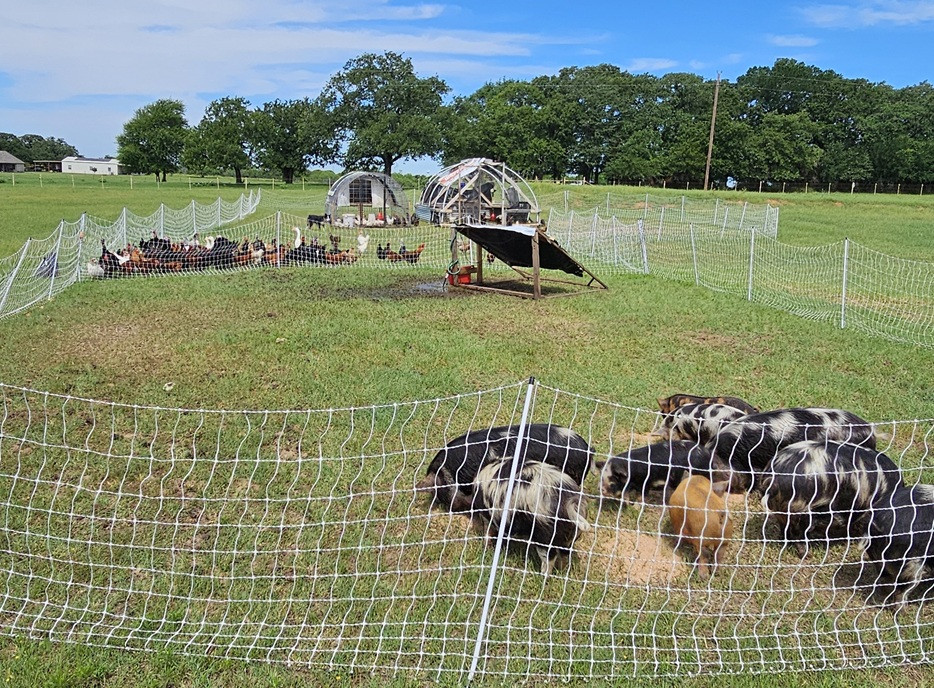
Pasture-raised pigs generally have more room to walk, graze, root, wallow, and choose between sun, shade, shelter, and social spaces. Conventional pigs are commonly raised in more controlled housing designed around climate, biosecurity, feeding, and manure handling.
Outdoor access brings benefits and challenges, including weather exposure, parasites, predators, fencing, soil protection, and seasonal forage changes.

Feed and Ingredient Transparency
Most pork—pasture-raised or conventional—depends on supplemental feed. The meaningful questions are what the ration contains, how it is sourced, and whether the farm can explain its standards.
Dos Lobos pork is raised with corn-free, soy-free, flax-free, non-GMO feed. That distinction is separate from pasture access and is one reason our production costs differ from commodity pork.

Flavor, Fat, and Eating Quality
Flavor and tenderness reflect breed, genetics, age, diet, exercise, stress, processing, chilling, storage, and cooking. Our Kunekune pigs are selected for carcass merit and tenderness traits and are raised slowly enough to develop useful fat and marbling.
Pasture does not guarantee superior pork, but transparent breeding and management can create a remarkably different eating experience.

Which Pork Is Right for Your Family?
Conventional pork offers broad availability and lower average prices. Farm-direct pasture-raised pork offers traceability, a relationship with the producer, and the ability to choose standards that match your priorities. (But trust us... finding prime pork in the grocery store is impossible. We have it.)
See available Dos Lobos pork and read our Complete Guide to Pasture-Raised Pork.

Frequently Asked Questions
Is pasture-raised pork always antibiotic-free?
No. Pasture access does not define medication policy. Ask the individual farm how it treats sick animals and handles withdrawal periods.
Is pasture-raised pork healthier?
Nutrient profiles vary with breed, diet, fatness, age, and production. Pasture access alone is not enough to make a universal health claim.
Why does pasture-raised pork cost more?
Land, fencing, rotation, slower-growing genetics, specialized feed, small-scale processing, labor, and lower economies of scale can all increase cost.
Does pasture-raised pork have more flavor?
Many customers notice richer flavor, but breed, fat quality, processing, aging, and cooking contribute alongside the production system.