The Difference Begins with Breed and Production System
Kunekune pork and conventional supermarket pork are not separated by one simple quality claim. Kunekunes are a smaller, slower-growing heritage-type pig commonly raised in pasture-based systems, while commercial pork is usually produced from genetics selected for efficient, standardized lean-meat production.
Quick answer: Compare the actual farm, feed, harvest age, processing, cut, and cooking method—not the breed name alone.

Growth Rate, Carcass Size, and Cut Proportions
Kunekunes generally mature more slowly and produce smaller carcasses than modern commercial hogs. Their cut sizes, fat cover, belly, shoulder, and trim proportions can differ, and individual carcasses vary with genetics, sex, diet, condition, and harvest timing.
Buyers should ask what package sizes and fat levels to expect instead of assuming the pork will resemble supermarket cuts.
Fat, Flavor, and Tenderness
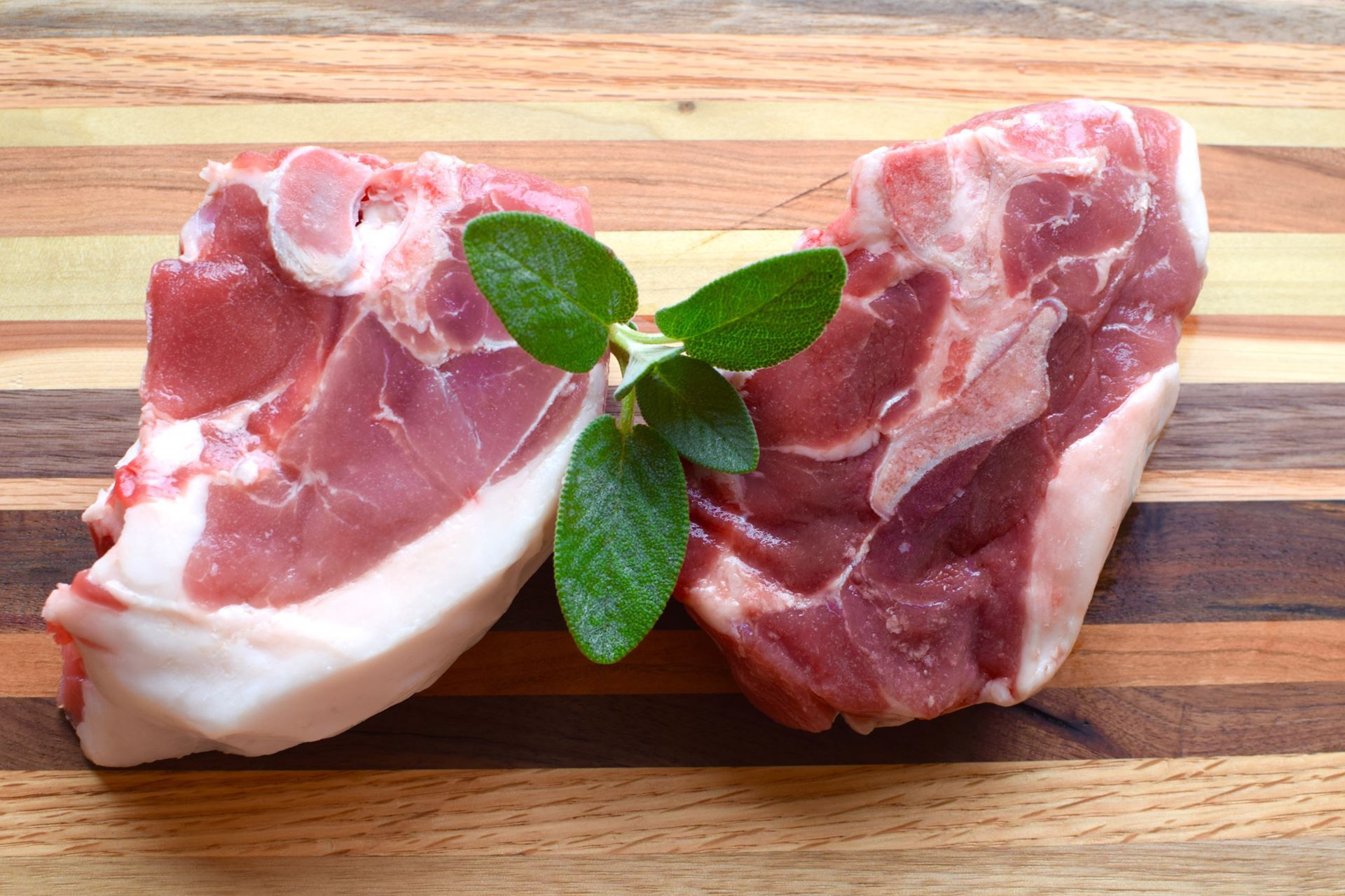
Well-raised Kunekune pork is often valued for rich flavor, useful fat, and tenderness. Those traits are influenced by genetics, growth, stress, handling, processing, aging, and cooking. Excessive condition can produce more fat than a household wants, while harvesting too early may reduce yield and development.
No breed name guarantees a perfect eating experience; the producer’s selection and management still matter whether it is a heritage breed like a Kunekune or a commercial breed.

Feed and Management Transparency
“Pasture-raised” and “heritage pork” do not fully describe the ration, medication policy, stocking rate, or time outdoors. Ask what pigs eat, how pasture is managed, how illness is treated, where processing occurs, and whether feed claims remain consistent through finishing.
Dos Lobos Ranch raises Kunekune pork on pasture with corn-free, soy-free, flax-free, non-GMO feed and provides direct answers about our standards.

Choose Pork for the Way You Cook
Kunekune chops, roasts, belly, sausage, and rendered fat reward cut-specific cooking. Use a thermometer, protect tender cuts from overcooking, and give working muscles time and moisture. Ask the farm how its cut sizes and fat levels differ from conventional pork.
At the very least, try a sample of our Kunekune pork (when we're in stock... and we sell out fast for a reason. This is damn good pork!)
Continue with The Complete Guide to Kunekune Pork, How to Cook Kunekune Pork, and shop current pork.

Frequently Asked Questions
Is Kunekune pork always fattier than commercial pork?
It often carries more useful fat, but condition, genetics, age, sex, diet, and harvest timing create substantial variation.
Does heritage pork automatically mean pasture-raised?
No. Heritage describes breed background; it does not prove how the pigs were housed, fed, rotated, treated, or processed.
Why are Kunekune cuts smaller?
Kunekunes are generally smaller and slower-growing than modern commercial hogs, so carcass and retail-cut dimensions differ.
Does Kunekune pork cook differently?
It can. Cut thickness, fat, connective tissue, and starting temperature matter. Use a thermometer and match the method to the cut.