
Are Kunekune Pigs Right for Your Homestead?
Kunekunes are friendly, intelligent, pasture-oriented pigs, but they still require secure fencing, companionship, shade, shelter, clean water, appropriate nutrition, hoof and health observation, and a realistic long-term plan.
Explore Kunekune Care & Management
Move from general planning into the focused guides for daily care, land, health, and breeding management.

Pasture, Fencing, Shelter, and Feeding
- Use secure pig-appropriate perimeter fencing and train pigs to electric fencing inside a safe enclosure.
- Provide dry shelter, deep shade, wallows or cooling options, and wind protection.
- Rotate pasture to protect soil and forage while interrupting parasite pressure.
- Supply clean water at all times.
- Balance forage with a complete ration appropriate for age and production stage.
Dos Lobos Kunekunes receive corn-free, soy-free, flax-free, non-GMO supplemental feed. Pasture is valuable, but forage alone does not automatically provide a complete diet in every climate or season.
Kunekunes perform well in a silvopasture setting among wooded areas. There are some farms that have reported being able to feed a herd year-round on silvopasture alone without supplemental feed, but it requires a lot of acres. The ones we've heard about are about 200+ acres of wooded pasture with whole herds thriving year round.
How Many Acres Do Kunekunes Need?
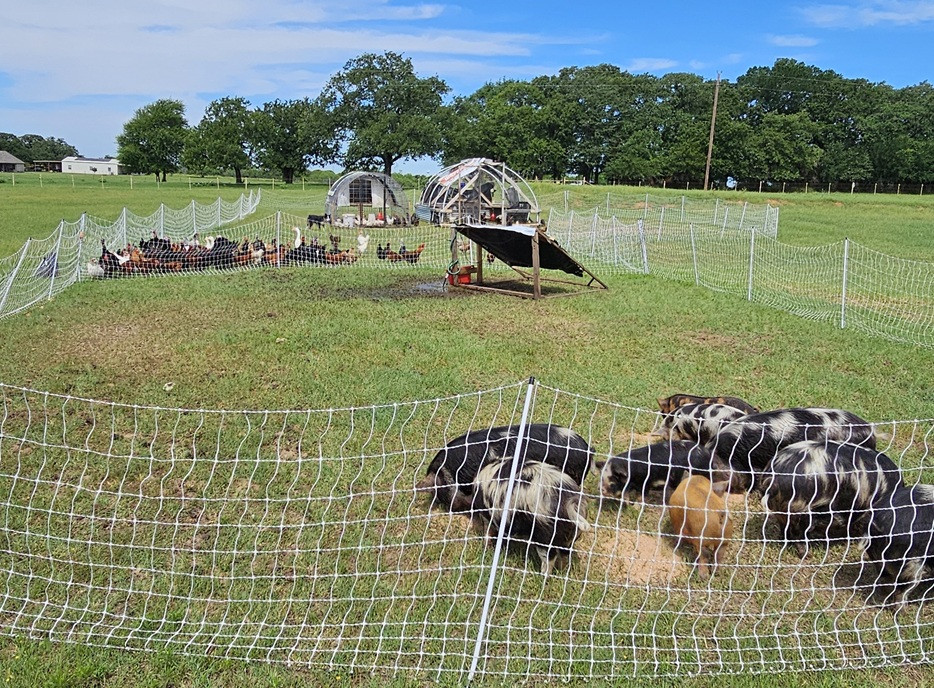
At our property at Dos Lobos Ranch, we've found that well-fed Kunekunes that have high quality feed will hardly impact a pasture in North Texas at all. The most we've had on one entire acre at a time were 30+ pigs between weanlings and 6 months of age and the weeds were still winning!
Our grow out, nursery, and breeding pens stay thick and lush year round with about 4 months of rest out of the year each year. Each pen is roughly 50 feet x 30 feet with coastal Bermuda grass. Other breeders in similar climates have reported that they easily lose track of 40 pigs on one acre in tall grass.
As soon as the limit breaks... we'll update it here. For now, it seems that pastures can support a lot of Kunekunes with minimal impact so long as they are fed high-quality supplemental feed.
Daily Care and Long-Term Management
Observe appetite, water intake, manure, gait, feet, skin, breathing, behavior, and body condition every day. Keep records for weights, breeding, treatments, hoof care, parasite monitoring, and changes in condition.
Plan ahead for intact males, breeding groups, farrowing, piglet processing decisions, transportation, emergency veterinary care, and humane end-of-life or harvest options.
Feeding Requirements
Our Kunekunes at Dos Lobos Ranch receive a daily ration of 3 lbs. of high-quality feed per day from weaning to 6 months of age, then they get backed off to 2 lbs. per day. Sows and boars get 2 lbs. per day while lactating sows get as much as they can eat in a day depending upon litter size (roughly 15-20 lbs. per day on average).

Frequently Asked Questions
Can Kunekune pigs live on grass alone?
Pasture can provide meaningful forage, but nutritional needs vary with forage quality, season, growth, pregnancy, lactation, and body condition. Many herds require balanced supplemental feed.
How much space do Kunekune pigs need?
Space needs depend on soil, rainfall, forage growth, rotation, stocking density, and management goals. More land does not replace secure fencing or active pasture management.
Do Kunekunes need another pig companion?
Yes, pigs are social animals and generally should live with compatible pigs rather than alone.
Are Kunekunes easy for beginners?
Their size and temperament can suit prepared beginners, but they are still strong livestock requiring daily care, infrastructure, and long-term financial commitment.