Kunekune Breeder Authority Guide
Understanding Bite and Jaw Structure
The jaws and teeth allow a Kunekune to graze, root, chew feed, maintain condition, and develop normally. Correct alignment also supports a balanced head profile and helps prevent avoidable wear or injury.

Why Bite Alignment Matters
A materially overshot or undershot jaw can interfere with grazing and feed intake, create uneven tooth wear, injure soft tissue, and worsen as the pig matures. Mild differences in a young pig should be documented and rechecked rather than judged from one hurried look.
Jaw Shape Is More Than Head Style
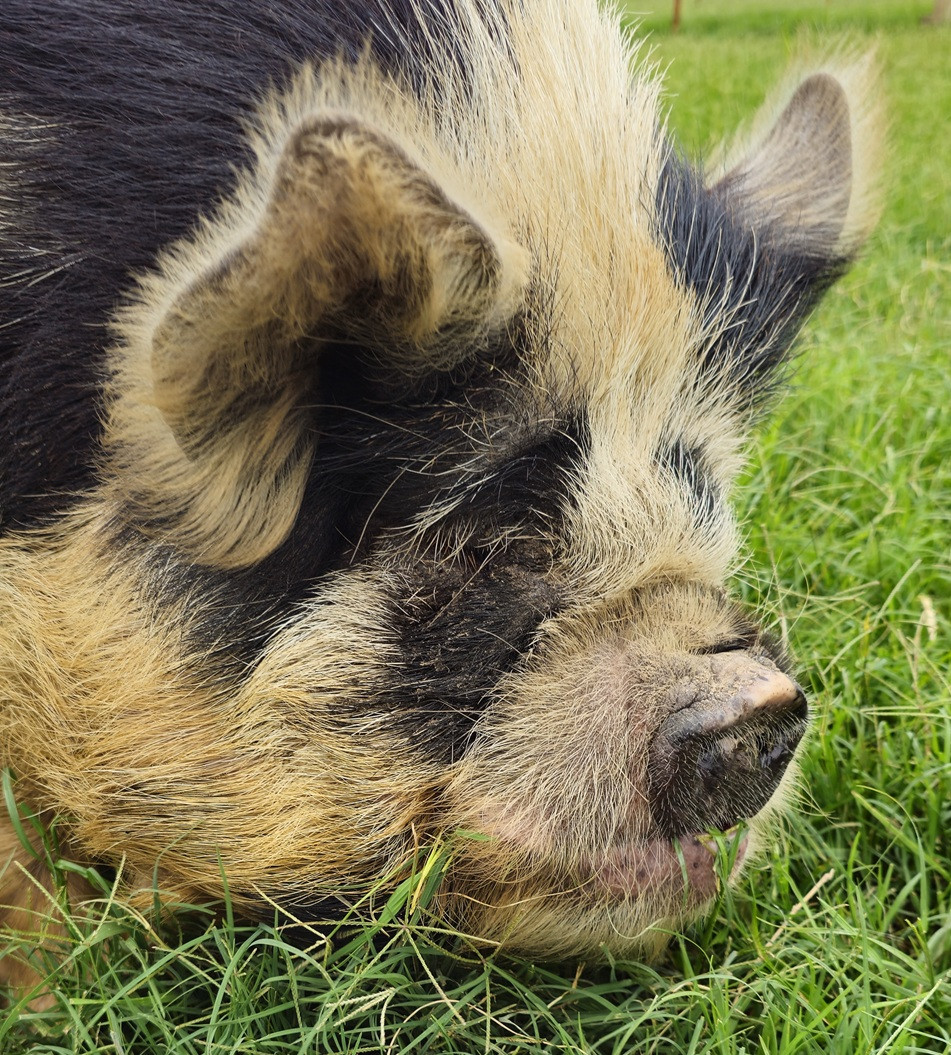
Kunekunes should retain recognizable breed character without sacrificing room for normal teeth, breathing, chewing, and jaw movement. An extremely shortened or distorted muzzle is not functionally desirable merely because it appears compact.
Key Features to Evaluate
Incisor Alignment
View the front teeth and jaw relationship. The dental arcades should oppose in a way that permits normal cropping and chewing without a large forward or backward displacement.
Jaw Symmetry
The muzzle and lower jaw should appear centered, with no obvious lateral deviation, swelling, or unequal development.
Cheek Teeth and Wear
Premolars and molars do most of the grinding. Uneven wear, broken teeth, trapped feed, odor, drooling, or difficulty chewing warrant closer examination.
Function
Observe grazing, eating, drinking, and maintaining body condition. Function can reveal a problem that a closed-mouth photograph misses.
Common Concerns
- Marked undershot or overshot jaw
- Side-to-side jaw deviation or facial asymmetry
- Broken, displaced, retained, or abnormally worn teeth
- Drooling, quidding feed, slow eating, or unexplained condition loss
- Injury, swelling, odor, or reluctance to chew

How to Evaluate a Kunekune Bite
- Observe the pig’s head and muzzle from the front and side.
- Watch it graze and eat before handling.
- With safe restraint, lift the lips enough to compare the upper and lower incisors.
- Check for symmetry, missing or damaged teeth, swelling, odor, and uneven wear.
- Account for age and the transition from deciduous to permanent teeth.
- Photograph the bite consistently and repeat the exam as the pig matures.
- Review parents, siblings, and previous offspring before a breeding decision.
- Seek veterinary evaluation for pain, trauma, infection, marked misalignment, or impaired feeding.
Continue the Kunekune Structure Guide
Because jaw alignment may have a hereditary component, document meaningful abnormalities, examine relatives, avoid compounding serious concerns, and evaluate the bite within the complete pig.
Start with The Master Guide to Kunekune Structure
- Feet and Pasterns
- Front-Leg Structure
- Rear-Leg Structure
- Body Length, Depth, and Capacity
- Back and Topline Structure
- Head and Wattles Structure
- Bite, Teeth, and Jaw Alignment
- Shoulder, Chest Width, and Front-End Structure
- Rump, Hip, and Ham Structure
- Movement and Gait
- Overall Balance, Proportion, and Breed Type
- Body Condition and Muscling
- Reproductive Structure

Frequently Asked Questions
What is an undershot bite in a Kunekune?
An undershot bite occurs when the lower jaw or lower incisors extend materially ahead of the upper jaw. Severity and effect on eating should be evaluated, documented, and rechecked with growth.
What is an overshot bite?
An overshot bite occurs when the upper jaw extends notably beyond the lower jaw, potentially preventing normal incisor contact and efficient grazing.
Can a young pig’s bite change as it grows?
Jaw relationships can become clearer during growth and tooth replacement, so young pigs should be rechecked. Serious mismatches should still be recorded and treated cautiously.
Should a Kunekune with a bite fault be used for breeding?
The decision depends on severity, function, maturity, relatives, and breeding goals. Faults that impair eating or appear familial are strong reasons not to breed the animal.